
Late summer 2023. This is my first attempt at a coiled basket. I gathered the plant materials from my yard and dried them before use – they are some kind of fine grass (fescue?) and Iris germanica leaves (split into narrower strips before drying). Both the grass and iris were soaked in hot water and mellowed (wrapped and rested) in a towel before use, though the iris took considerably longer because it has a waxy coating. (Fun fact: soaking iris leaves give off a smell like fish oil.)
I started this project thinking I would be wrapping dried grass with silk thread, but it quickly became apparent it would take forever if I didn’t switch to something bulkier for the wrap. I ended up pulling out the dried iris leaves and aiming for a palm leaf basket look, as palm leaf stitching seems to be especially prevalent in extant coiled basket finds, many of which are from the Ancient Egypt/Middle East area. (See, e.g. Mechanical Engineering in Ancient Egypt, Part 56: Basketry Industry – showing extant examples of basketry and describing materials used, including Conclusion on page 13: “The ancient Egyptians used materials such as palm fibers, palm fronds, halfa grass and reed in producing their basketry.”) My vision was something similar to this lidded basket from Egypt ca. 1981-1640 BC at the Metropolitan Museum of Art, but of course a few thousand years fresher.


For a gauge to keep the coil stuffing size consistent, the beginner advice is to use a cut section of plastic drinking straw. Well, I didn’t have any of those when I sat down to start the project, and I wasn’t going to wait until I had a chance to grab one from a shop. I needed something NOW! Given that I have plenty of plants with hollow/pithy stems growing around the house, it didn’t take long for me to remember the dead twigs pruned off my elderberry trees that spring. I went out and cut a selection of straight twig sections that were dry but still in good shape and brought them inside to hollow out with a small flathead screwdriver and a bamboo kitchen skewer. Now I have 2 different sizes of gauges for coil work, and the insides have enough grip not to easily slide off! I used the thinner one for this project.
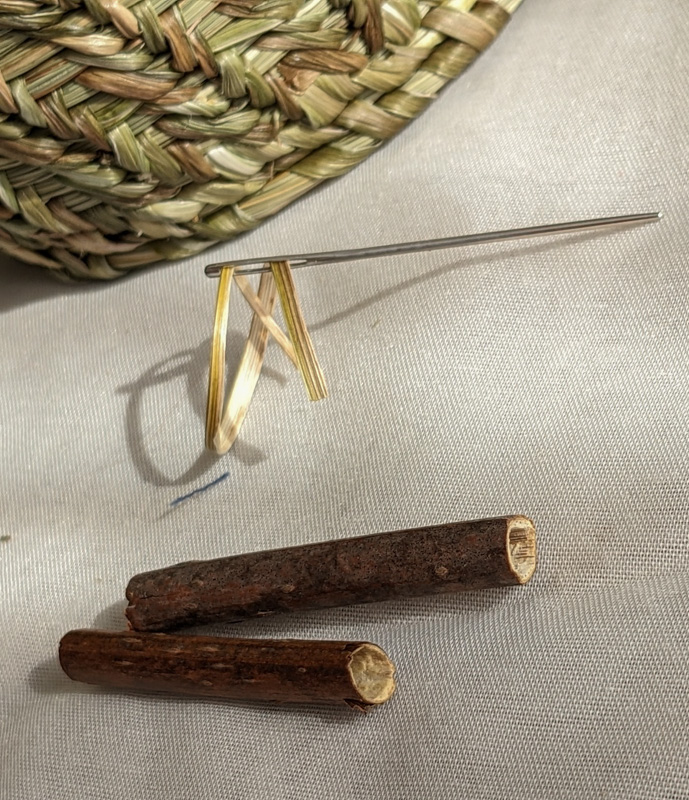
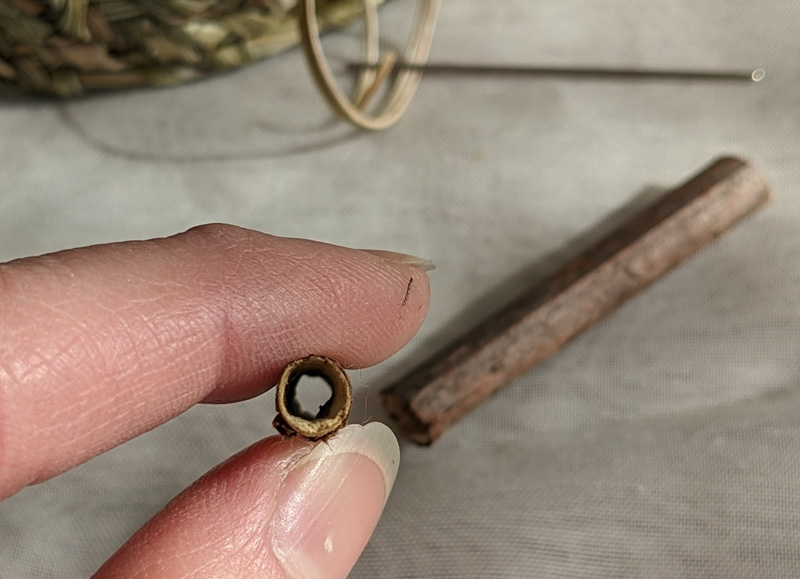
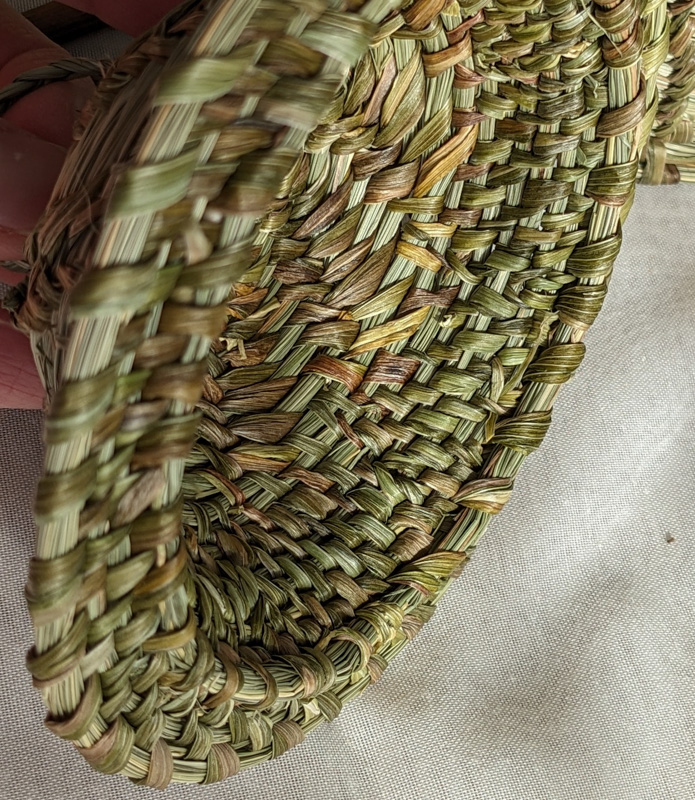
The grass used for the coil core is quite pretty, so I used a wide spacing on most of the stitching to allow it to show. I used a tapestry needle to work the stitching, and it was a challenge getting the iris strips to work with the eye. I broke one needle in the process of pulling the stuffed eye through the coils. I will definitely have more on hand and maybe look for some needles that are a little larger for next time.
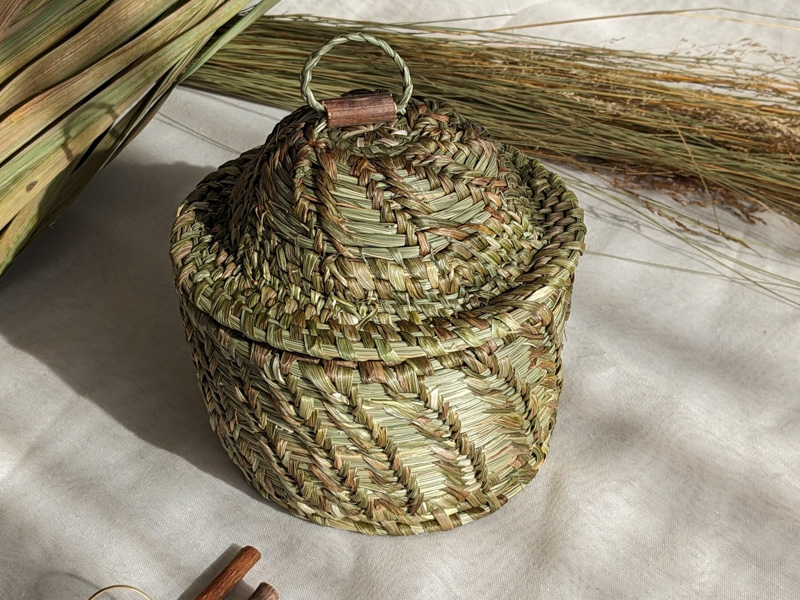
I didn’t make the same mistake of starting with thread on the lid, so the starting coil looks a lot better. The handle on the lid is a loop of braided grass that I stuck through an elderberry twig “bead” (made while I was creating the gauges). The lid also has an interior lip to help keep it from sliding off the basket constantly.
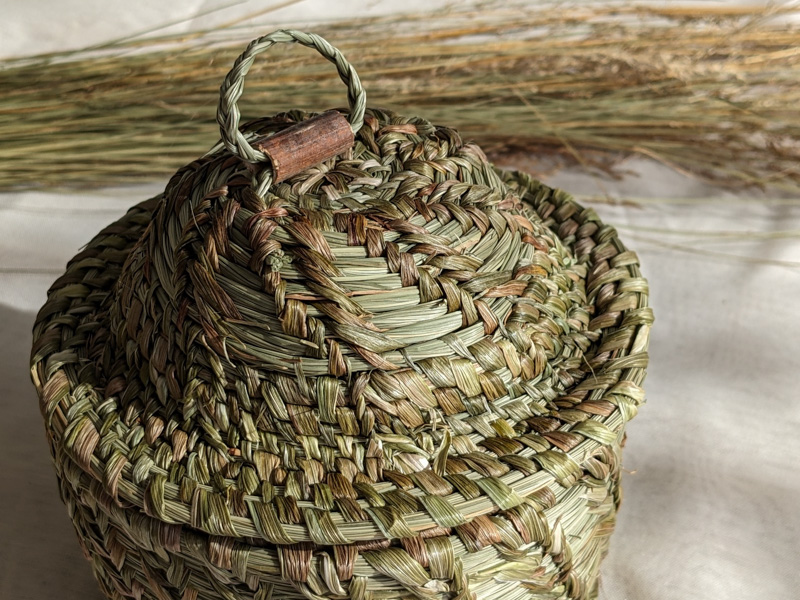
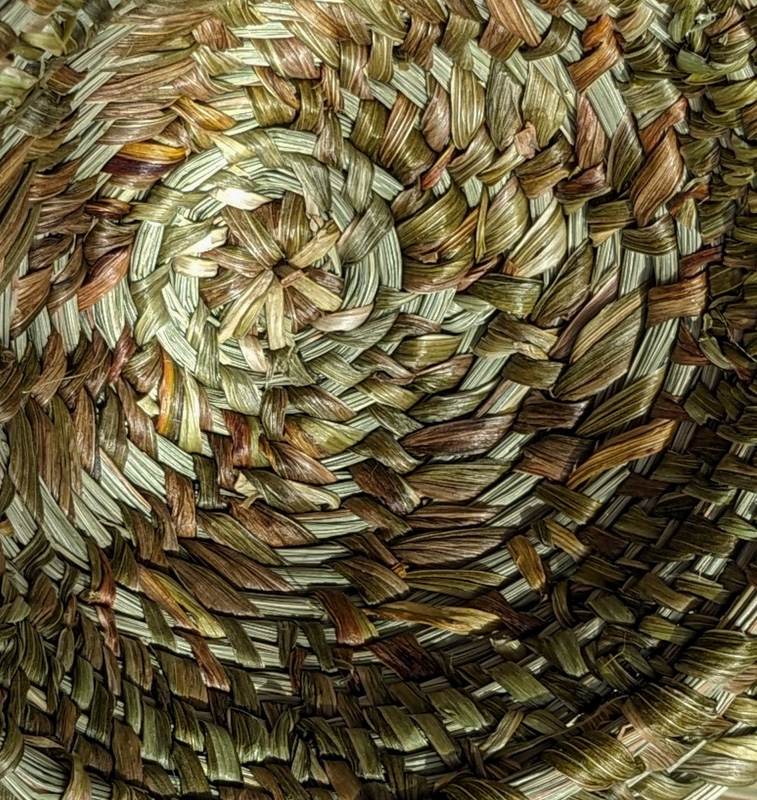
The basket ended up a bit wonky and not quite symmetrical, but I think it’s pretty good for a first attempt. I learned a lot about how the coils and columns of stitches behave. It looks nice sitting on the top of my bookshelf, and the cats haven’t figured out there are things inside of it yet!

After completing this project, I became curious about extant examples of pre-17th Century basketry and what techniques were used. Research and project ideas ensued, so stay tuned for more basketry work!
Some lessons learned:
– Seriously, do not use actual sewing thread.
– Soak less material than you think you will need – things get pungent if the leaves stay moist for more than 2 days, and you can always soak more.
– Have extra needles on hand for when you break one.
– When you have the option, use the big hole.
– If your cat is a grass fiend, you will have very close supervision during this process (and frequent attempts to sample your work).
– Making a functional basket this way isn’t that hard.
– Symmetry and straight lines are harder than you expect.
 Smash the Shell
Leave a comment