
Every May, the dandelion season comes to visit! For the last two years I have collected tall dandelion flower stalks to try out in basketry and cordage. These hollow, stems dry and rehydrate very nicely.
I found that I get the longest, highest quality stems if I wait until the flower turns over to seed. The flower stalk grows taller at this point because it will help the seeds disperse better in the wind. Often I am picking stems with an open seed puff or a closed seed head that has not yet opened up — the stem quality degrades quickly after the seeds have been dispersed. You just need to pop off the heads and toss them before you hand the stems up to dry. Otherwise the seed heads will dry out and open up, and you will have dandelion fluff all over the place!
The way I dry my stems is by threading them onto strong cord or yarn and then hanging it up like a garland. I start by tying a loop on one end and threading a needle onto the other. Then I stab each individual stem and thread it onto the cord, tying loops every 6 inches or so.
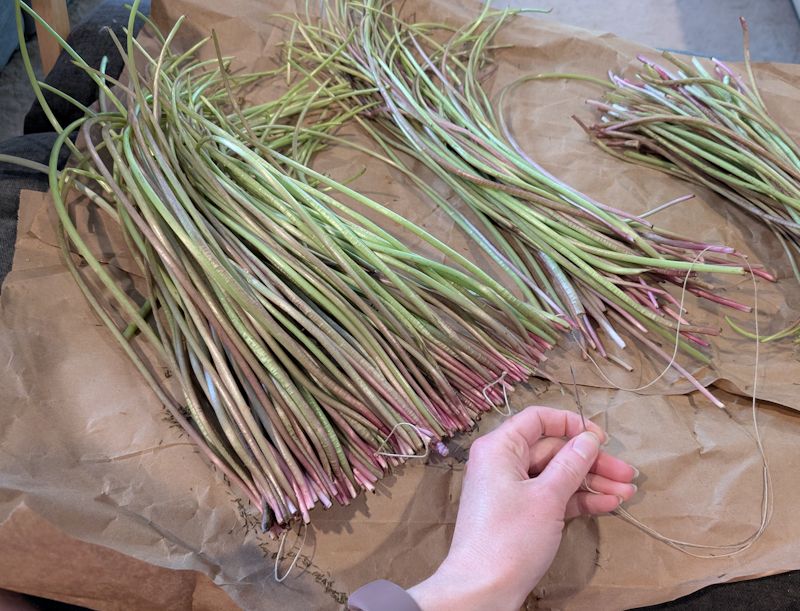
When the cord is loaded up, I tie another loop at the end and use the loops to hang the whole thing up high where my cats cannot reach it. (Usually from curtain rods in my sunroom or a small tension rod popped into the top of a door frame.)
After they are fully dry, I roll up the garland of stems into a bundle for storage. Then when I need some for a project, I can just snip the knot from one end of the cord and pull some stems off to use. I rehydrate them by laying them on a hand towel and spritzing them with water, then rolling them up in the towel to let the water soak in and distribute. You just want them damp enough to be pliable. The wetter they get, the more their color will darken. This can be a nice feature, but experiment with care because they will lose their structural integrity if they get too wet.
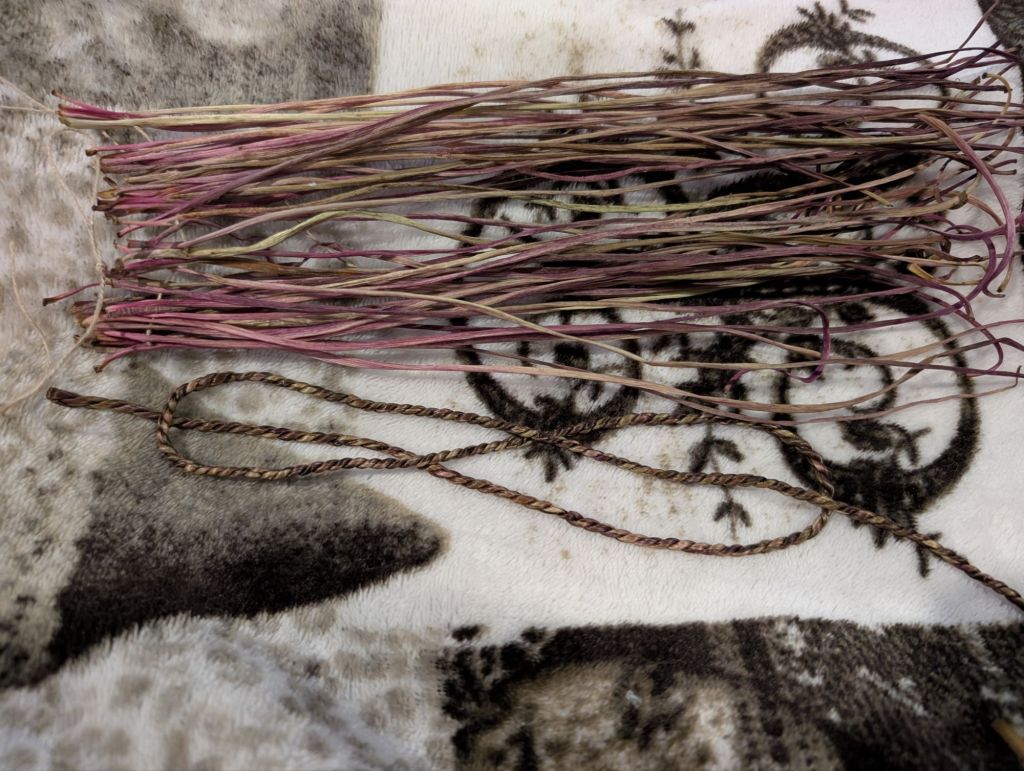
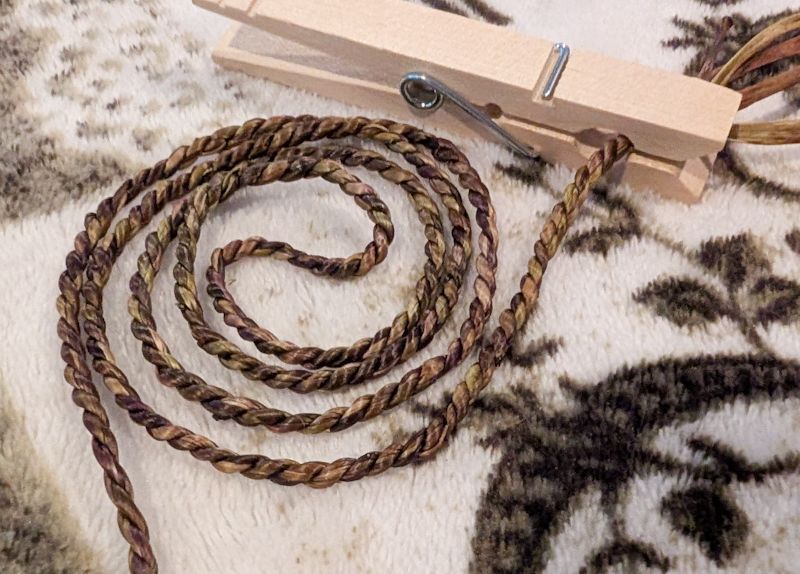
These stems made some lovely bronzey cordage (that I would only use for decorative purposes, not load bearing ones). I had to get them a bit wetter to stand up to all of the twisting needed to make the cord.
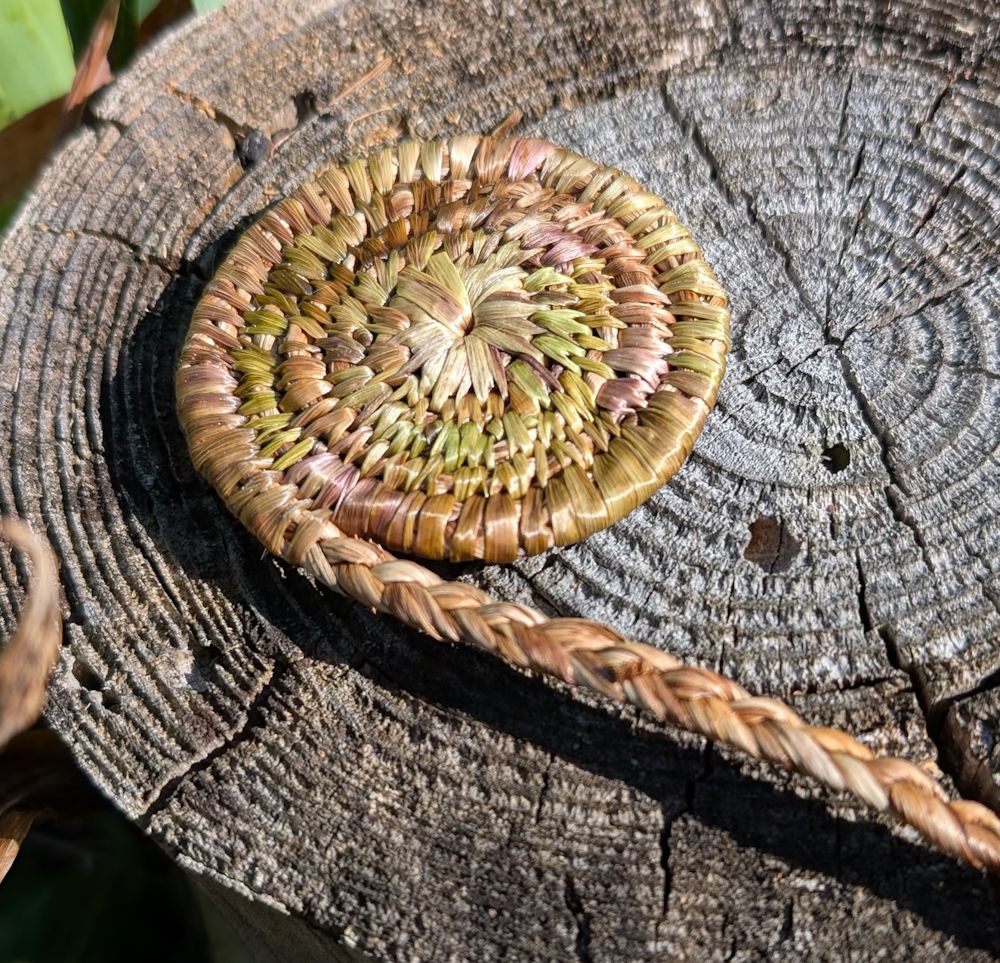
However, my favorite outcome was when I used the stems for wrapping/stitching material in coiling. Their shine and color variegation is simply gorgeous. This test piece uses a daylily leaf braid as the core and dandelion flower stems for the stitching.
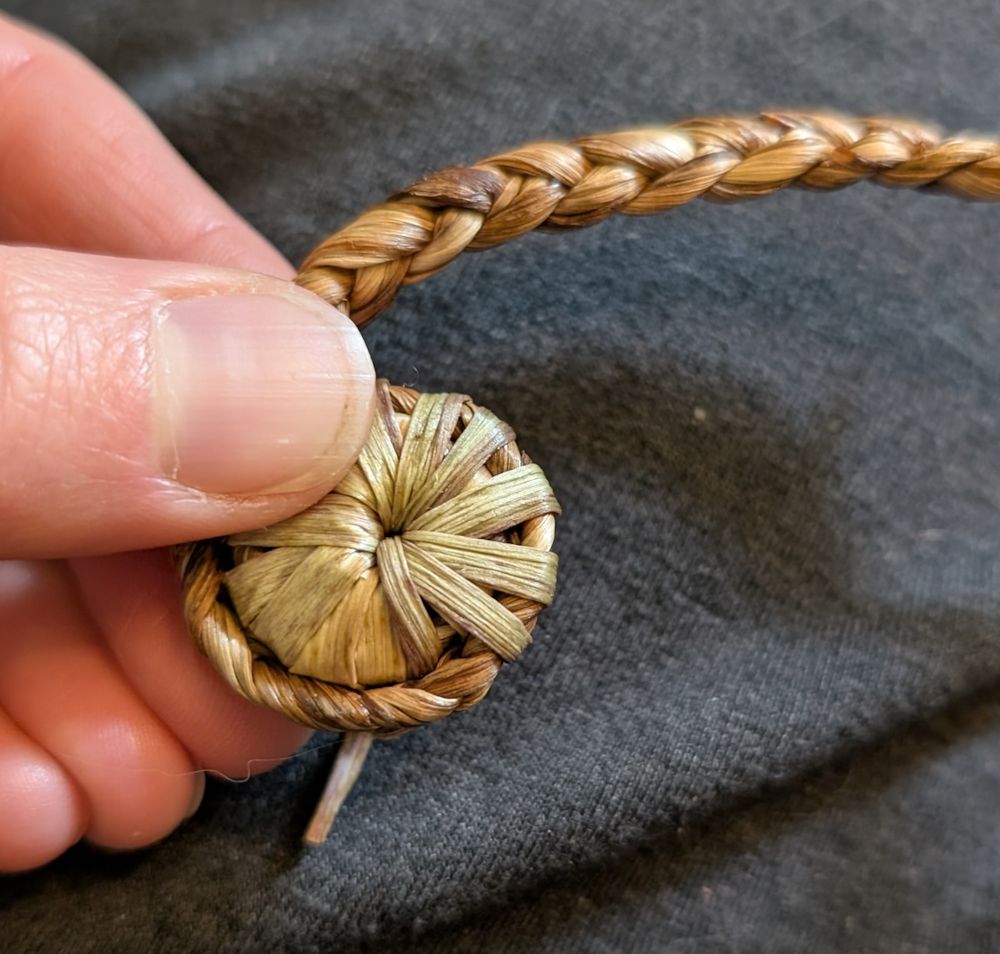
Because the stems are relatively short (typically between 8-16″), I have to join new pieces in frequently. Combine the close stitching with the frequent joins, and it’s slow going. I think the outcome is worth it, though.


Response to “Dandelion Stalks”
Fascinating. Love the detail on how to do this.
LikeLike