
I tried spinning a small amount of my nettle fiber that I “hackled” by pulling it repeatedly through one of my double-row wool combs. What was left looked very nice and straight. I wanted to see if I could spin a very fine thread with it by splicing in new pieces as I spun.
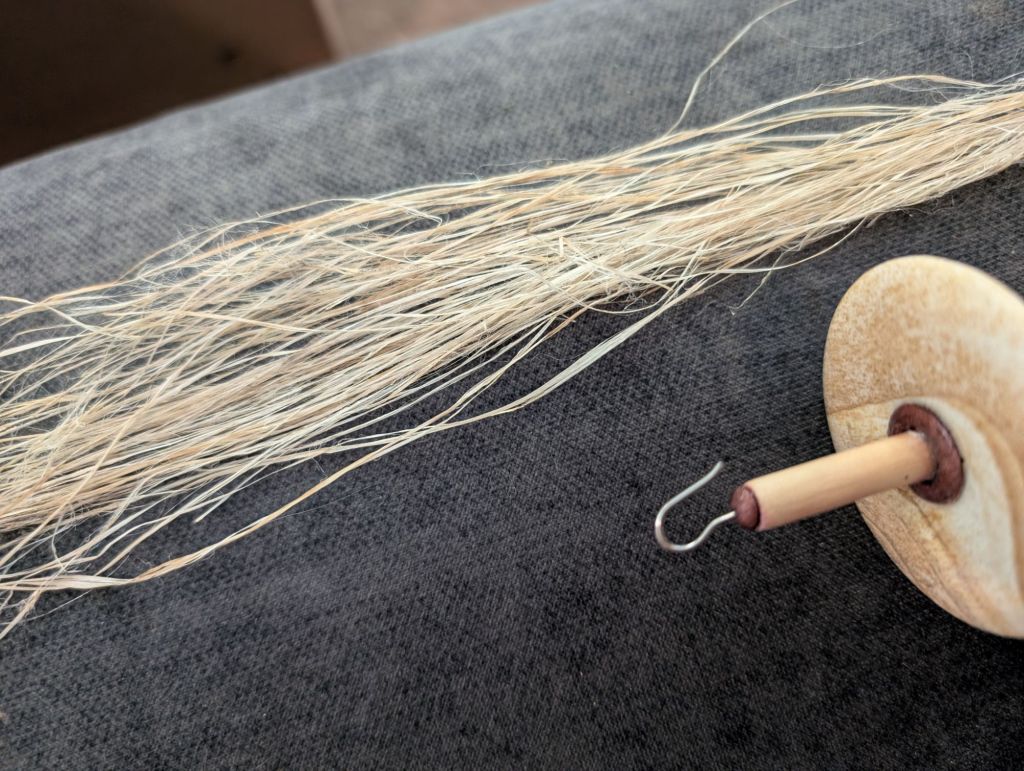
I used a very light, top whorl spindle with a hook. This is similar to the extant examples I have seen from Egypt (example 1, example 2, example 3), except that the whorl would have been a bit thicker with more heft or even had a second whorl underneath the first. Yes, top whorl spindles with hooks are “period,” and don’t let anyone tell you otherwise! It just depends on where you look. To get closer to the examples, I left the small bit of spun wool already on the spindle to take advantage of the extra weight.
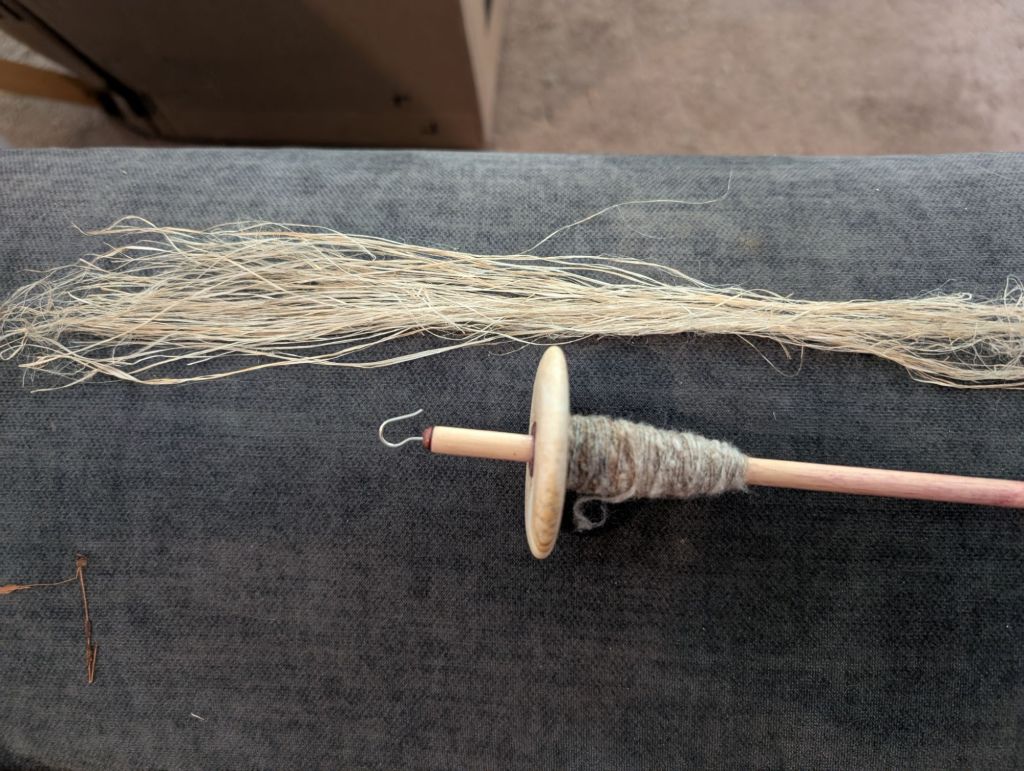
I found that wet spinning (frequently dampening my fingers to apply a little bit of moisture at the twist location) helped keep the fibers a bit tidier. I successfully produced a fine thread, but I am pretty sure this can only be pulled through fabric in one direction without causing the ends of the fibers to raise up and potentially fray. I haven’t actually tested out using it yet, but I will find something appropriate to test it on eventually.
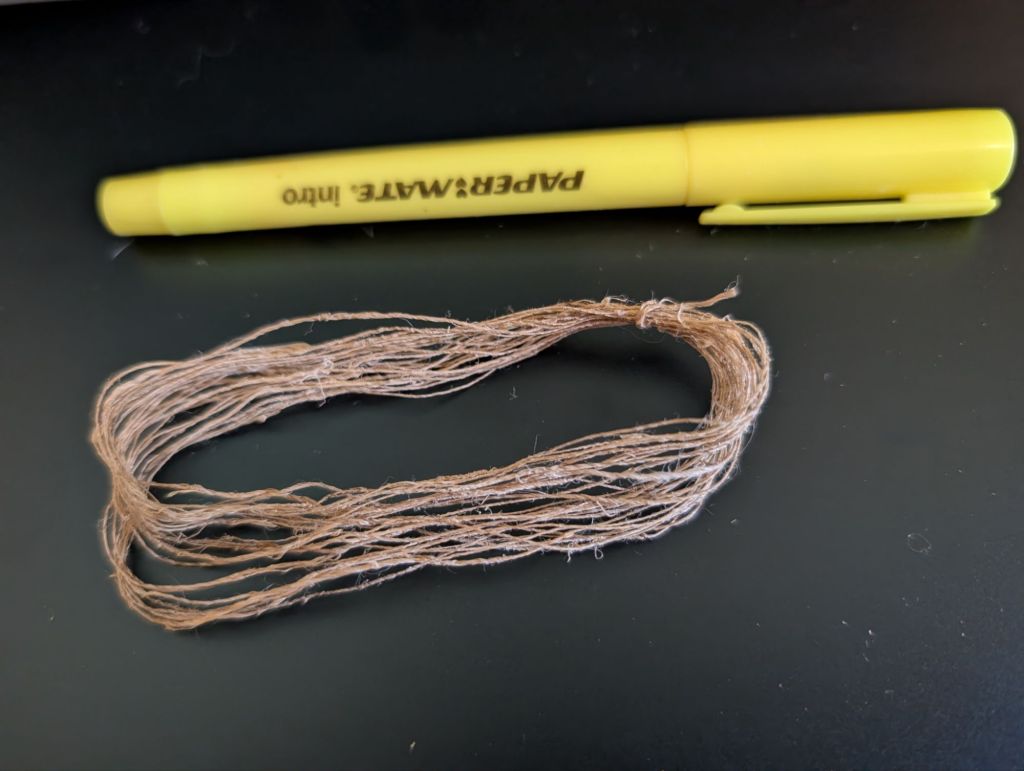
It’s okay for a first test, and the fiber behaved beautifully. I do think I will probably get better results if I look up appropriate techniques instead of just “winging it.” For now, I want to learn more and get better at using long line fibers and spliced spinning.
 Smash the Shell