
This project started when I discovered a type of women’s headwear from Antinoë that is essentially a large fabric headband with padding inside. Some of the extant objects are woven fabric with bulky ribbing created by adding extra weft, and others are made using a sprang interlacing technique.
I was fascinated by these “bourrelets” and went down quite a rabbit hole trying to find the context for these items. Of course, during that time I decided I wanted to make some of my own, so here is the introduction to go with my future posts about that process!
Now for the nerd stuff!
Here are some examples of what I saw that initially sparked my interest, with a few specific items described and linked in the list below:
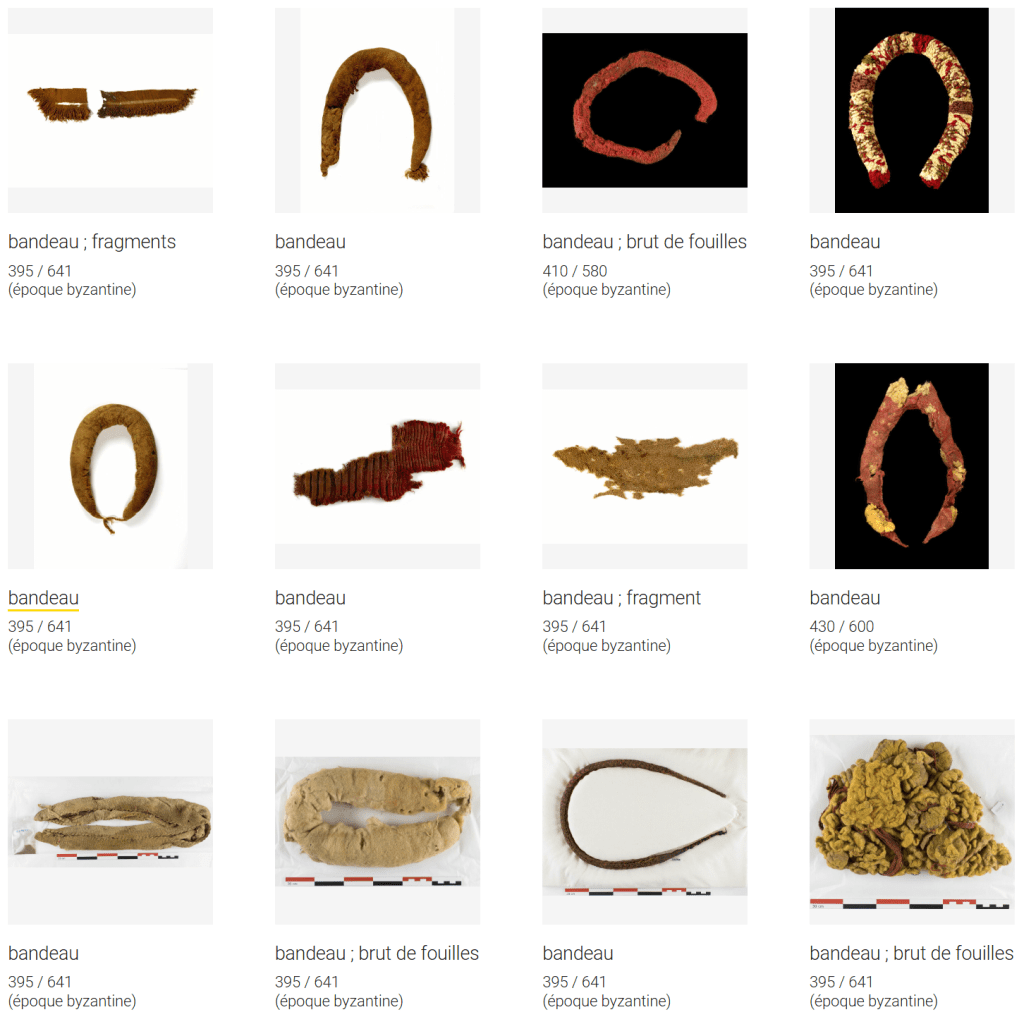
- A woven headband with a strongly ribbed fabric
- A sprang headband, apparently undyed, with visible sewn seam in the pictures
- A sprang headband, dyed red, badly degraded and showing some structure of the interior stuffing
- A sprang headband, dyed red, showing red stuffing and associated with a mantle dyed a matching shade of red
As far as I can tell, the styling of these accessories is still a “best guess” situation for the pros who know more about this than me, but there are some depictions, artifacts, and grave excavation notes that provide clues.
Those clues informed the Antinoé, à la vie, à la mode exhibition organized by the Musée des Tissus of Lyon, France, which has a digital slideshow from the exhibit available featuring textiles from Antinoe. The pictures show several different possible styles of women wearing these padded headbands in slides 3, 4, and 12. Additional information on the exhibit is available in the PDF of the press dossier.
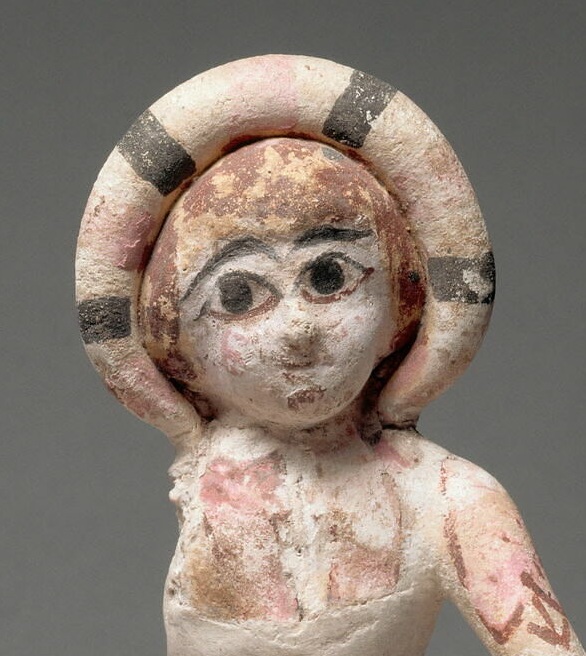
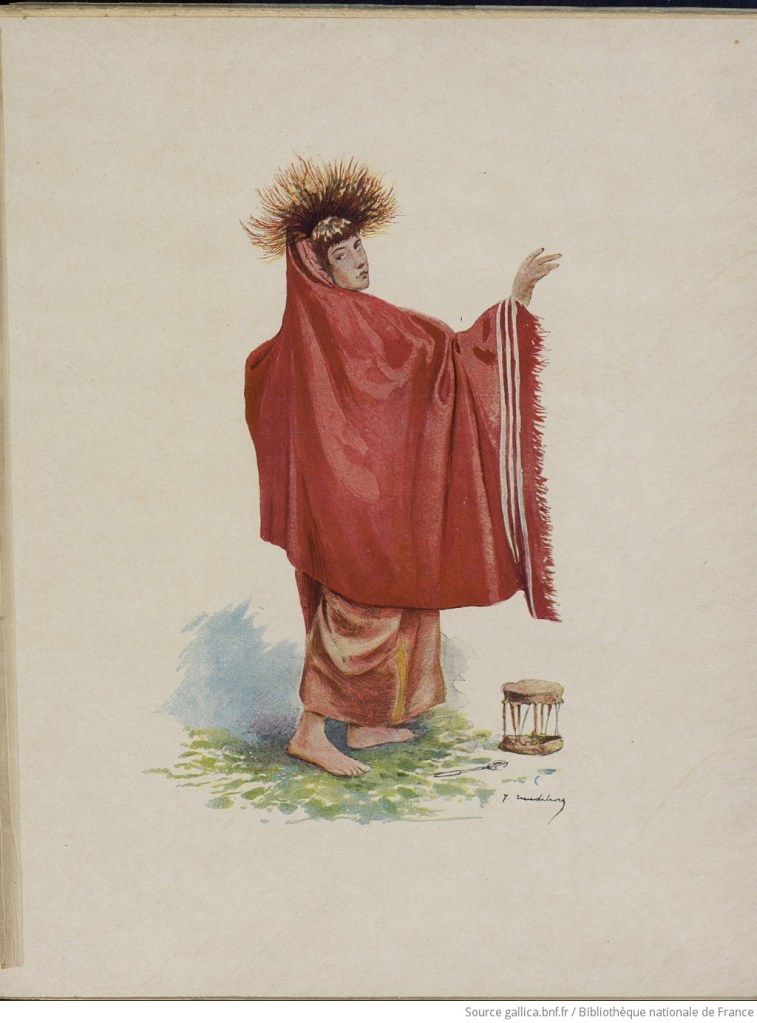
Some of the context clues (see brief descriptions and links in list below pictures):
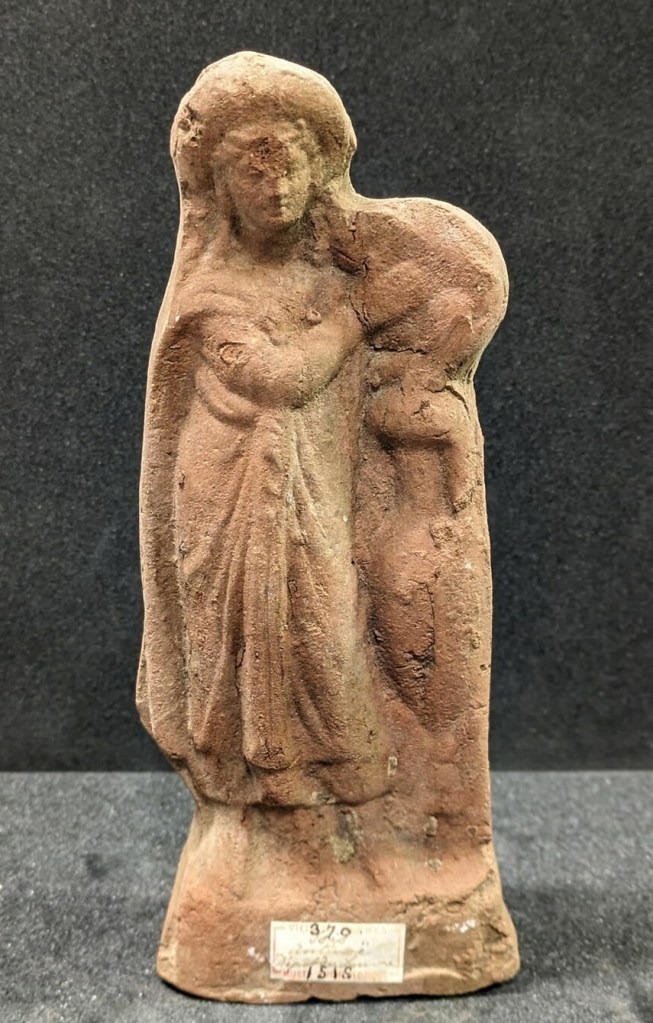
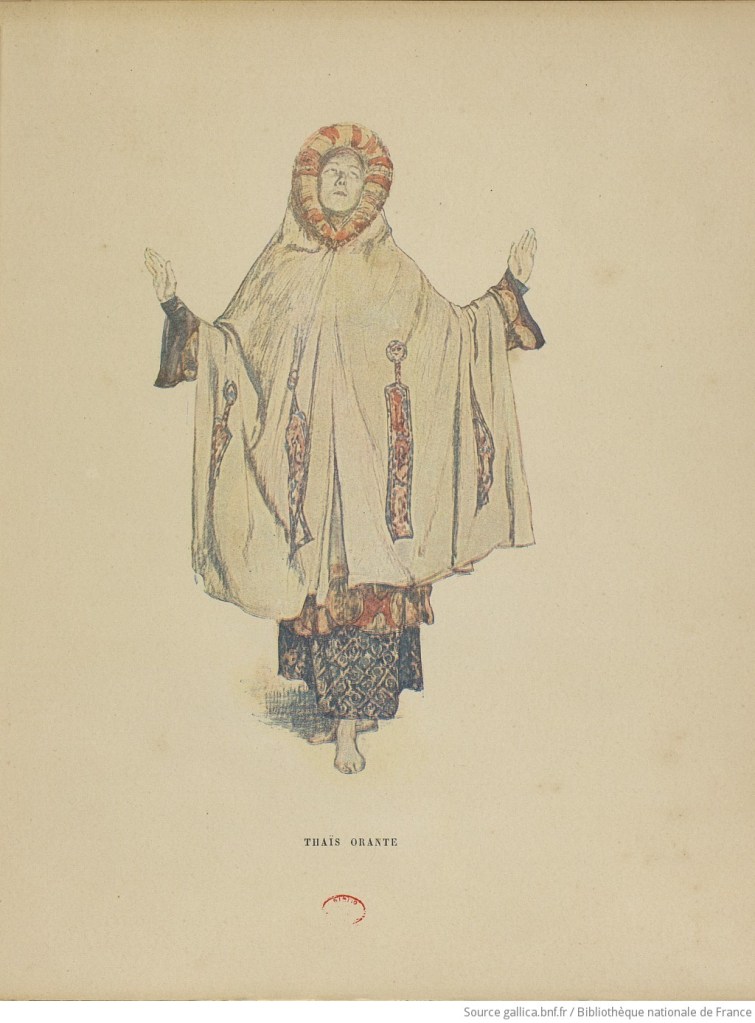
- A above: Figurine of a woman wearing a large headband apparently attached to a mantle or long veil
- B above: Figurine of a woman or girl wearing a headband
- C above: Excavation journal drawings: Gayet, Albert. Fantômes d’Antinoë : les sépultures de Leukyoné et Myrithis (1904) (theoretical illustration at view 39 and in situ sketch at view 47)
- D above: Excavation journal drawings: Gayet, Albert. Antinoë et les sépultures de Thaïs et Sérapion (1902) (theoretical illustration at views 21, burial arrangement at view 57, and in situ sketch at view 63)
- Not pictured above: Excavation notes and photos from the tomb of Tgol show a ribbed yellow headband positioned around her head and attached to the edge of a hooded mantle which was draped over her face like a shroud and wrapped the rest of her body. (Diletta Minutoli, “Antinoe, Necropoli Nord 2007: la tomba di “Tg’ol”. Prime informazioni.” in Antinoupolis. I., Istituto Papirologico “G. Vitelli”. Scavi e materiali. vol. 1 61-73.) A grayscale photo of the mantle and attached headband is available here, at Figure 16.
- Not pictured above: Two extant fragmentary mantles with headbands attached: From Antinoe, tomb C 370 ; From Arsinoé
Extant objects providing construction details:
- An example of the stuffing/padding inside
- Shows some stuffing; clearly sprang starting with 1/1 interlacing at the tips and transitioning to 2/2 interlacing as the work moves toward the center of the band
- Extra wefts added to make bulky ridges in woven fabric version
- Flat view of a fragment of the sprang fabric, showing the gradual angled transition from 1/1 to 2/2 interlacing
- Outer sprang fabric without the padding inside, showing where the edges were reinforced and sewn together to form a tube; there are remnants of color and colored thread along this seam area, possibly from being sewn to dyed fabric such as a mantle/veil ;
Here are some photos of my early experiments:
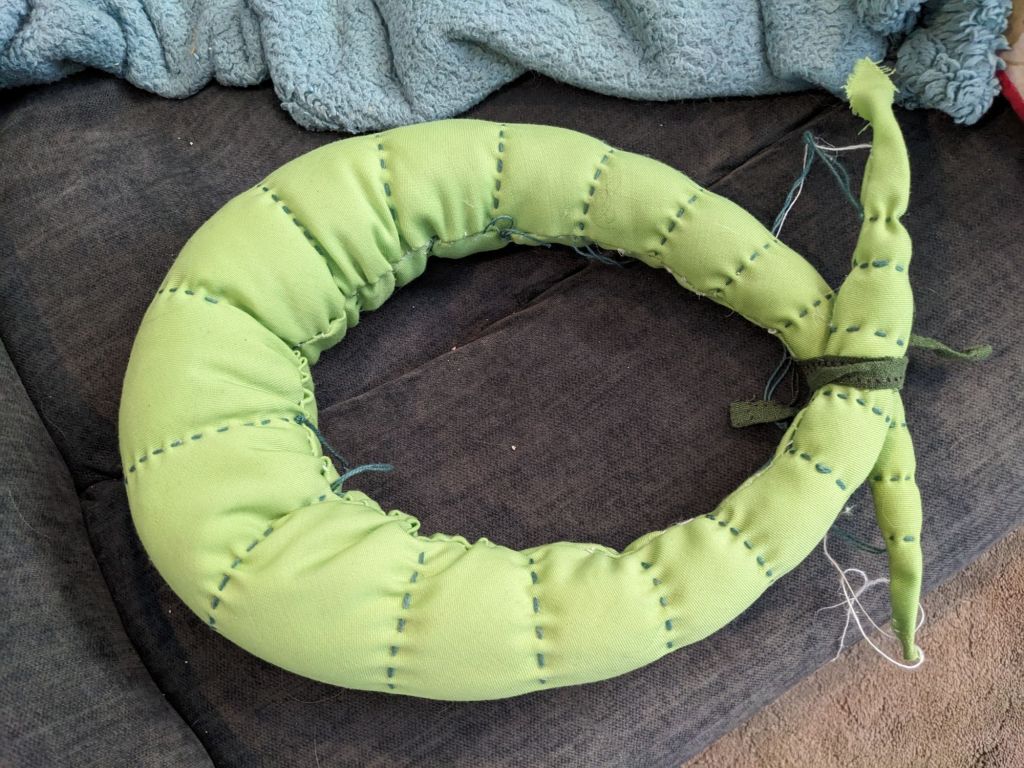
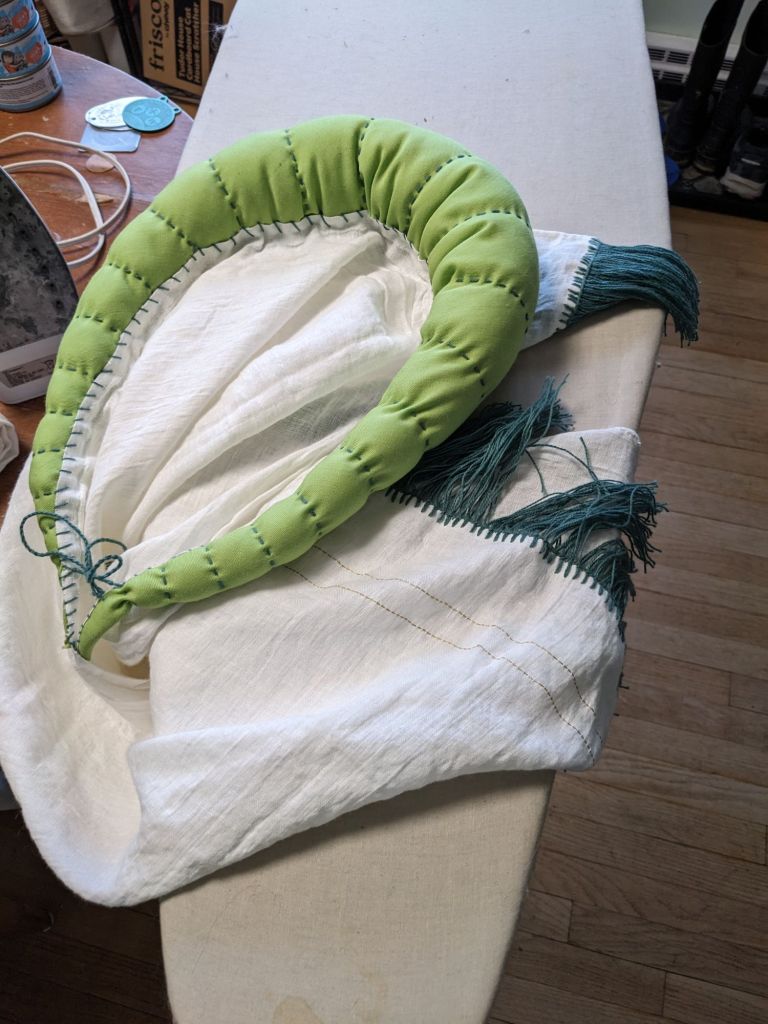
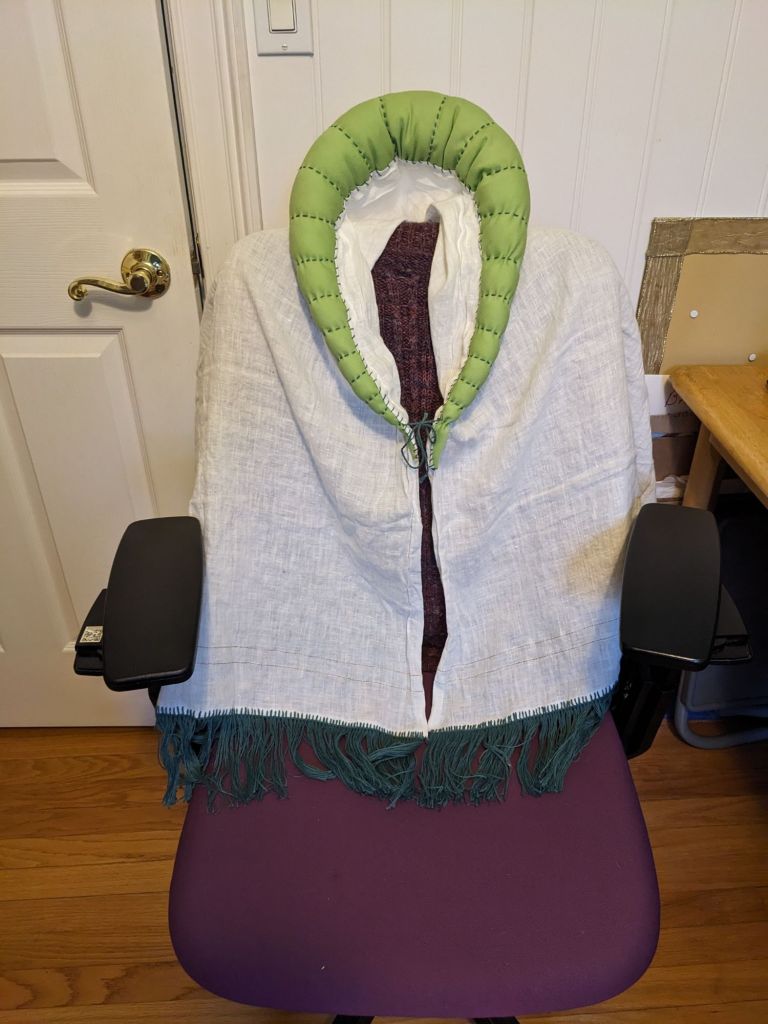
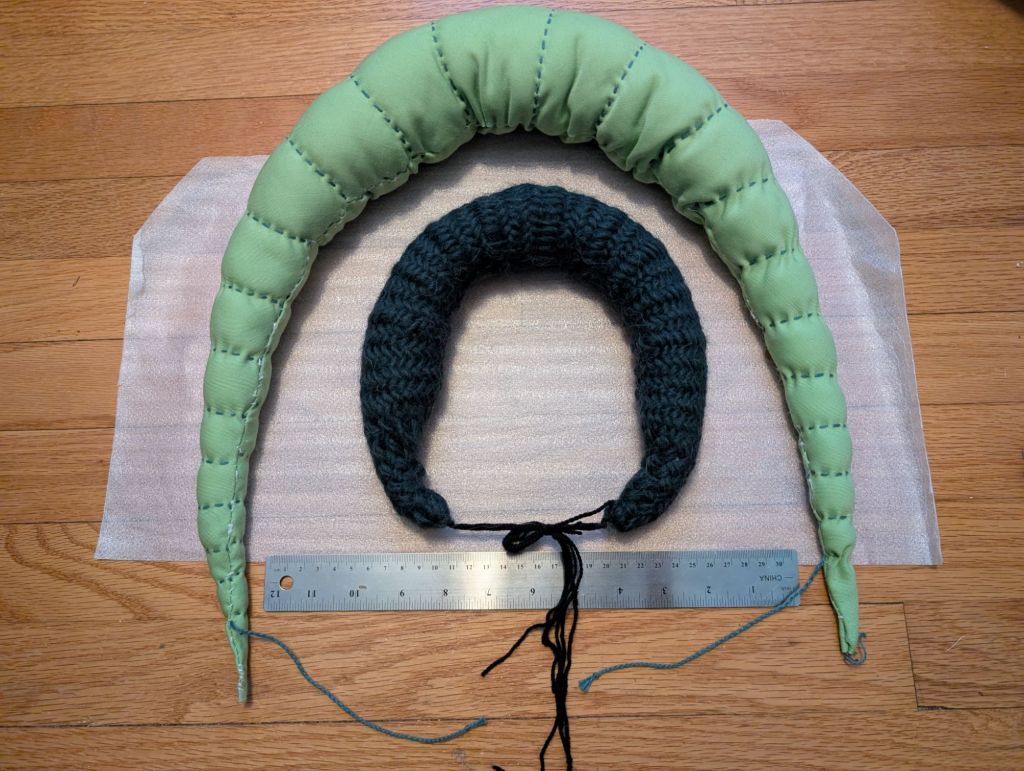
The large lime green headband below was the first one, made out of wool twill fabric in dimensions close to the museum objects and stuffed with neppy waste wool left over from combing. I sewed this to the edge of a lightweight linen shawl to test the physics.

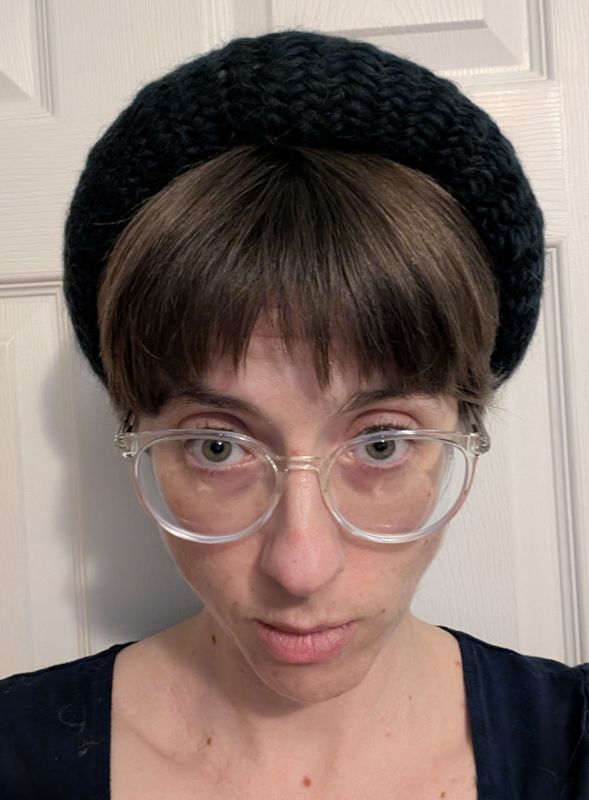
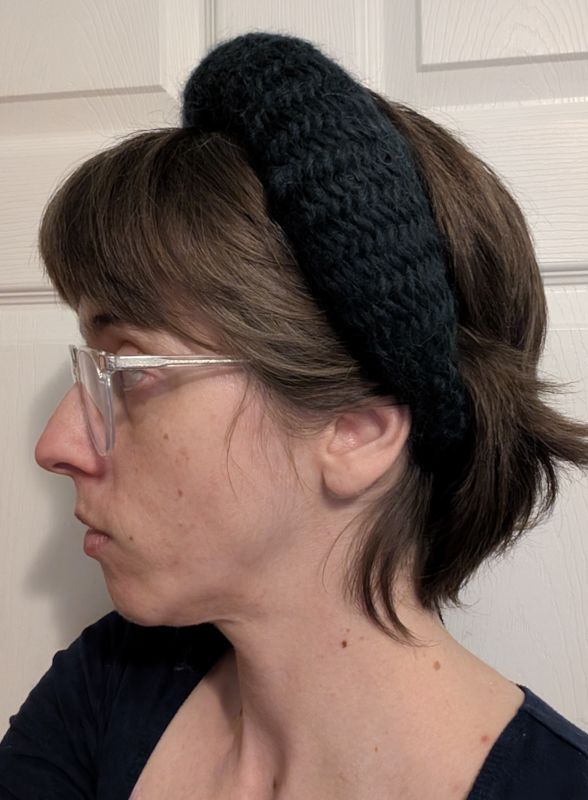
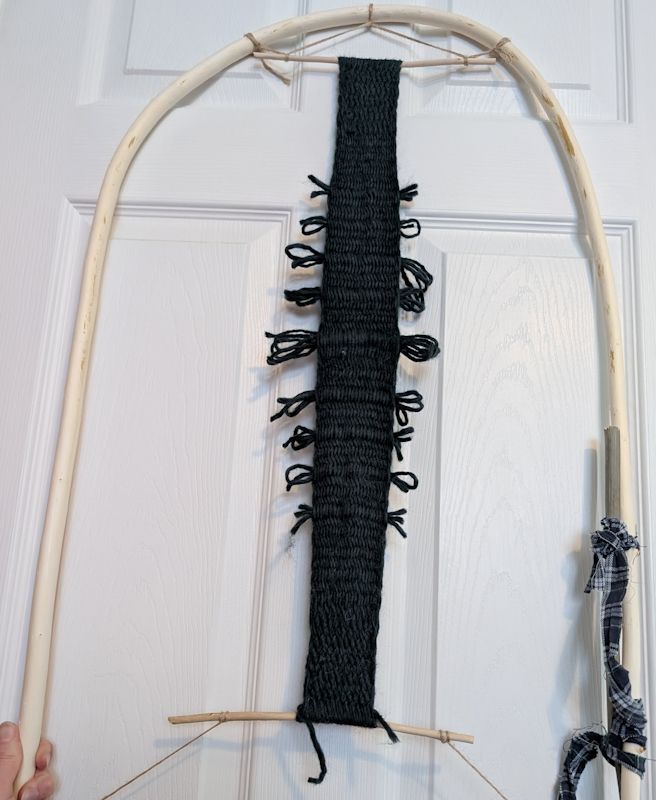
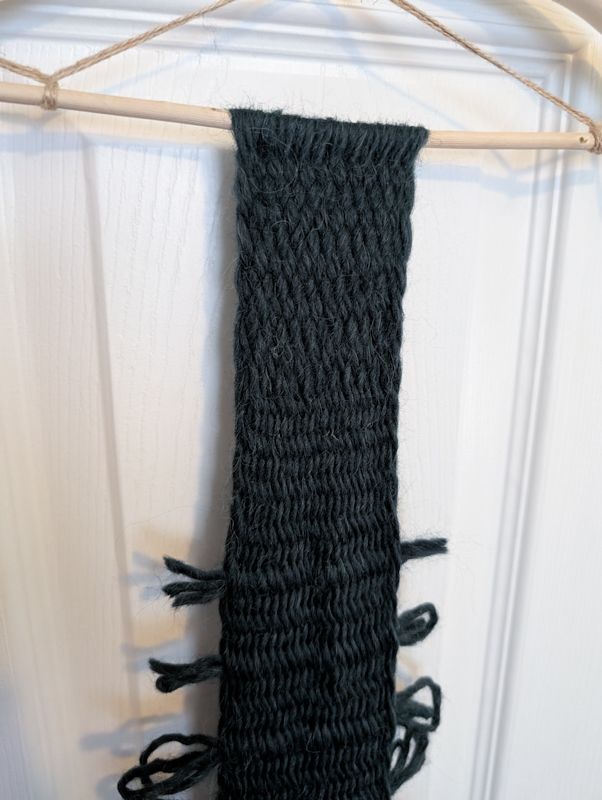
This week, I made the dark green headband below in sprang interlacing using bulky wool and miniature dimensions to test out some techniques and learn how the fabric and the transition between 1/1 interlacing and 2/2 interlacing behaves. I just learned how to do sprang interlacing, so this was good practice.

For context, here they are together with a 12-inch ruler:
 Smash the Shell