
Fall is a tremendously active foraging season for basketry materials. Especially since so many things start changing color!
In my case, it also means cleaning up some outdoor areas so they can be effectively cleared of snow for safe access. That is what has to happen annually in my “why are you like this” corner of the gravel walkway used to access our heating propane tanks. My Pollinator Patch garden is adjacent to this walkway, and some of the native plants living there get ambitious.
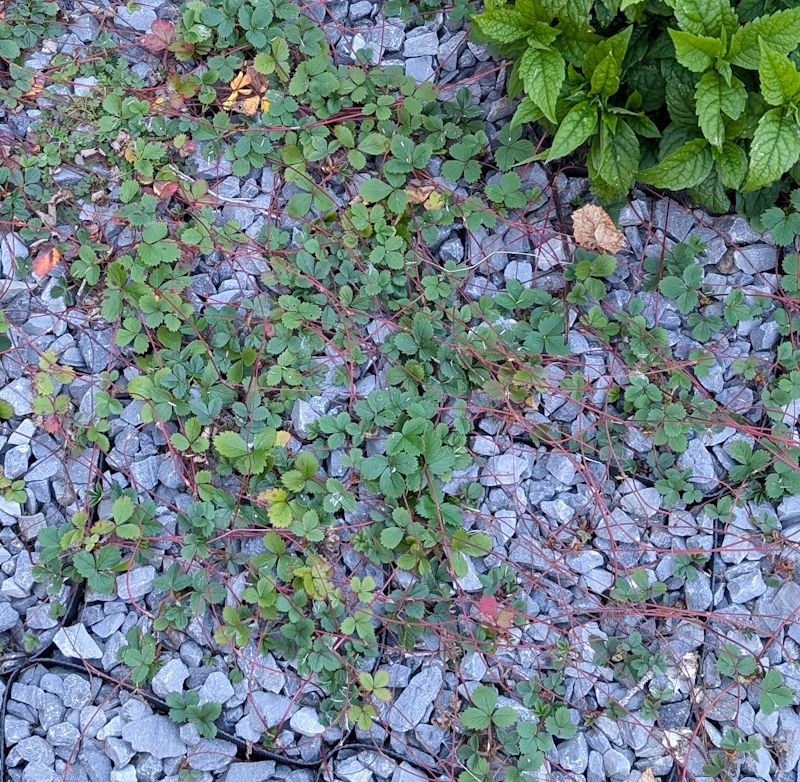
Everything pictured on top of the gravel is this year’s growth. The wild strawberry is particularly enthusiastic about filling in this space, but it can cause slippery conditions if I let it take over and stay through winter. Fortunately, the runners can be used for decorative twining to embellish baskets, so pulled plants won’t go to waste. (They are somewhat delicate at the connecting nodes, so they aren’t great under significant tension.)
When harvesting native plants, you should be mindful of how much you take so you don’t damage the health of the overall population. Wild strawberry is a high value plant for wildlife, and it makes a great ground cover to shade and protect soil. However, when it gets into spaces that cause health or safety concerns, stern boundaries are necessary.
There is a robust population of the strawberry plants in the garden along the outside of the walkway, and I leave those alone. Each year they try to colonize the gravel, and each year I let them go until it needs to be cleared in preparation for winter. As a result, I don’t harvest the lovely autumn red runners from anywhere else on the property because I get plenty just from clearing the gravel walkway!
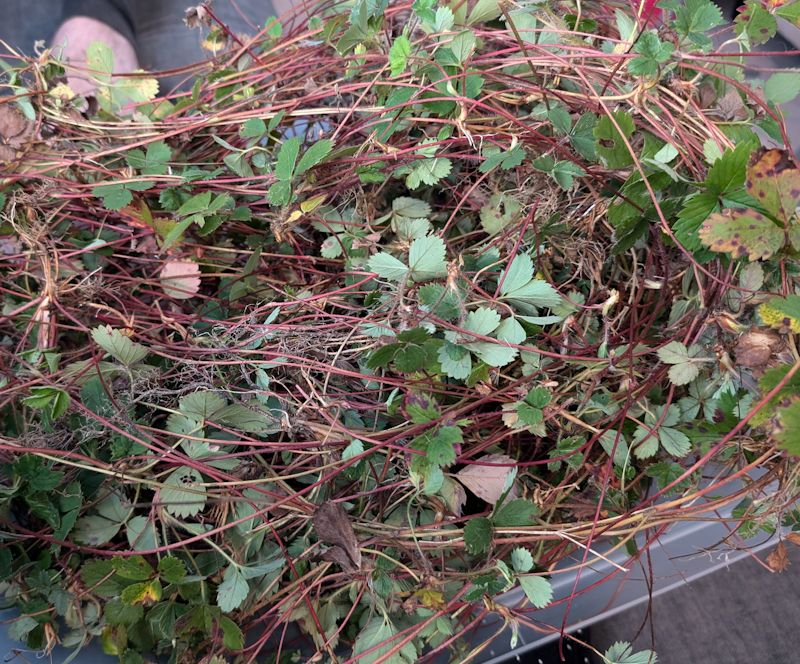
The runners are connected by crowns, so if you want long lengths you will have to trim the roots and tops of the crowns while leaving enough plant material behind to keep them connected. I use my pruners for pieces I can’t pinch through with my fingernails.
Here’s what the strawberry runners look like when they’re cleaned and coiled (but not fully dry yet). This is about half of what I ended up with from clearing the gravel walkway.

It took several days of working on these in my free time to get through the pile. I kept the unprocessed plants wrapped in plastic so they would not dry out before I had a chance to clean and coil them.
After coiling, they need to fully dry before going into any enclosed storage. (Then they will need to be soaked before they can be used.) The color darkens into a lovely deep red/purple as they dry.

Over time, this will fade to more of a brown color like many other red/purple botanical pigments, so when I use these to embellish a basket I will try to be mindful of how the colors will look after the red fades.
 Smash the Shell