
Rather than ordering standardized basketry supplies from a retailer, I wanted to explore the historical practice of using locally available materials. I am also a gardener trying to foster native ecosystem development. I am carefully experimenting with native plant species, but there seems to be no end to the exotic invasive species I have to cut out of our woods and field areas. So, are these invasive species at all useful for basketry, or are they really good for nothing but the wood chipper/burn pile?
The experiments are ongoing, but here are the results of some species I tried making into cordage. As a note — I generally cut wider materials into several thinner strips and use 3 or more strips per “ply” to help keep my cordage even. Otherwise you can get a very “thick and thin” effect when you join in a new piece.
Honeysuckle Bush (Lonicera sp.)
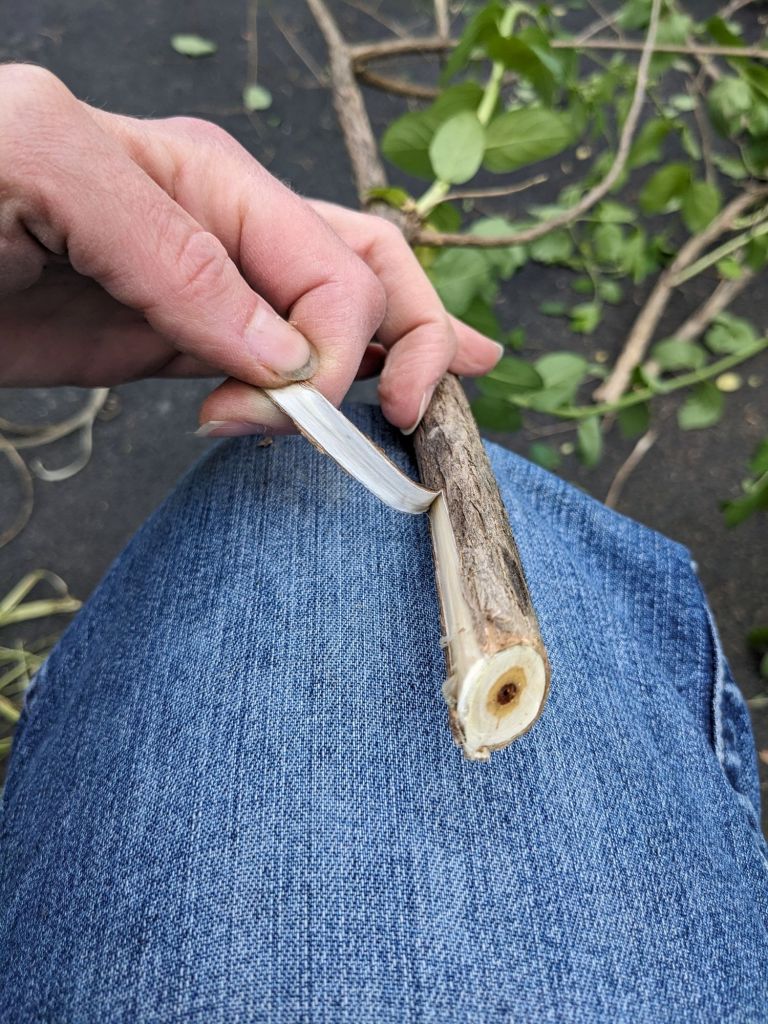
You can identify the invasive honeysuckle bushes easily by checking the inside of a branch to see if it is hollow like the one shown below. Our native kind does not have hollow twigs. Bast (inner bark) of older branches makes a soft, fine string. However, it is a bit rough on the hands separating it from the outer bark — it is easiest to let the stripped bark dry until just a little soft from humidity and them separate them.


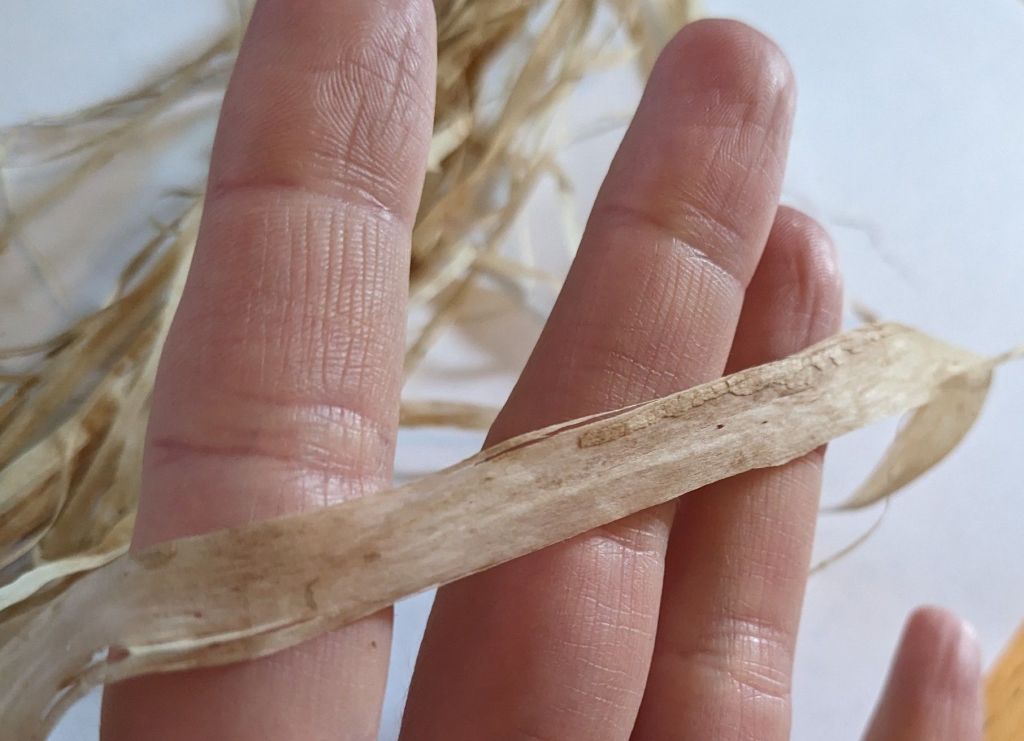
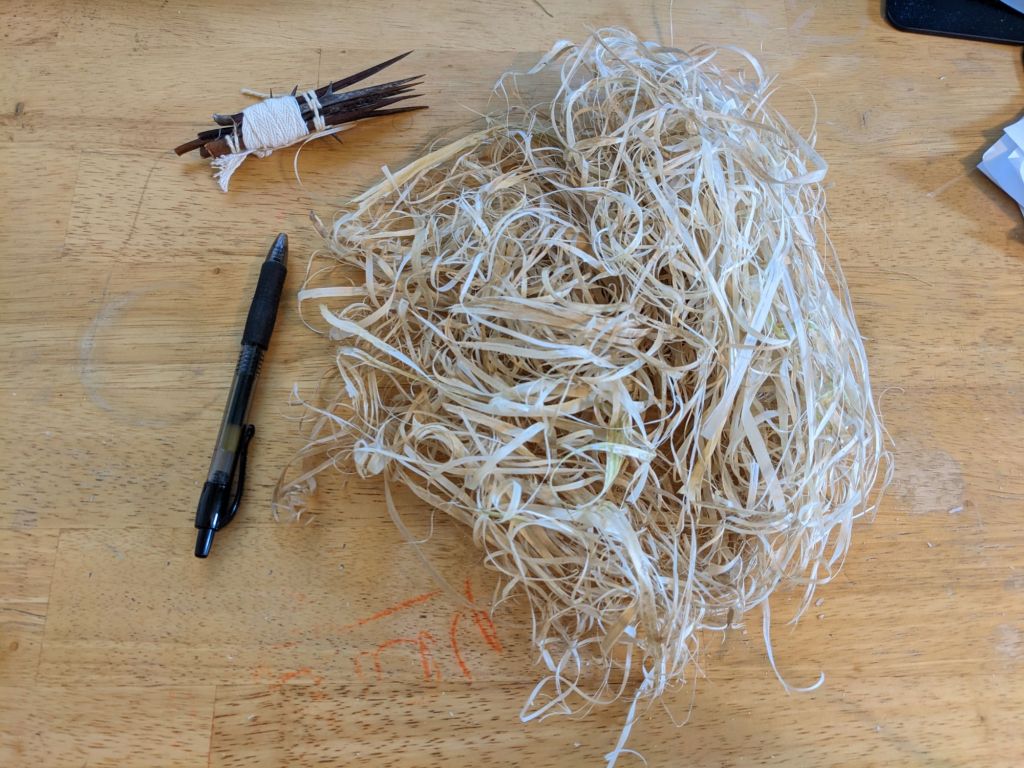

Peeled skin of the young, green shoots is easier to obtain and prepare, and it makes comparable cordage except for differences in the color and shine. I did prefer working with the batch I rinsed and squeezed out several times while fresh (the one pictured with the clip) over the one I did not clean, and it also had a slightly nicer end result.
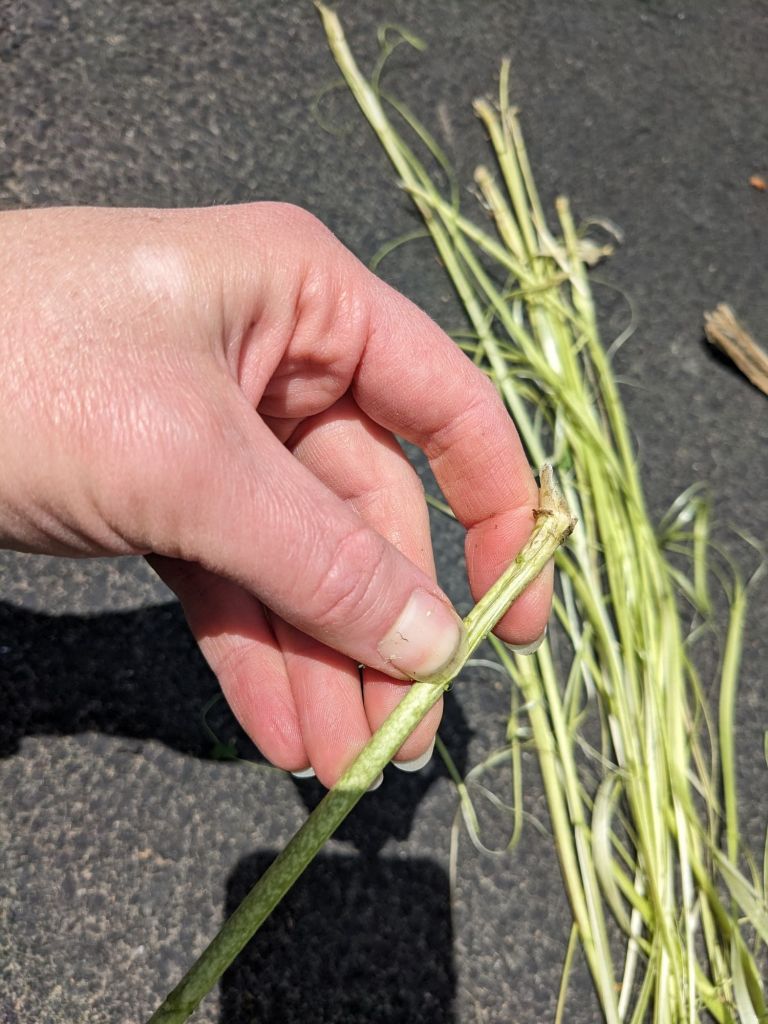
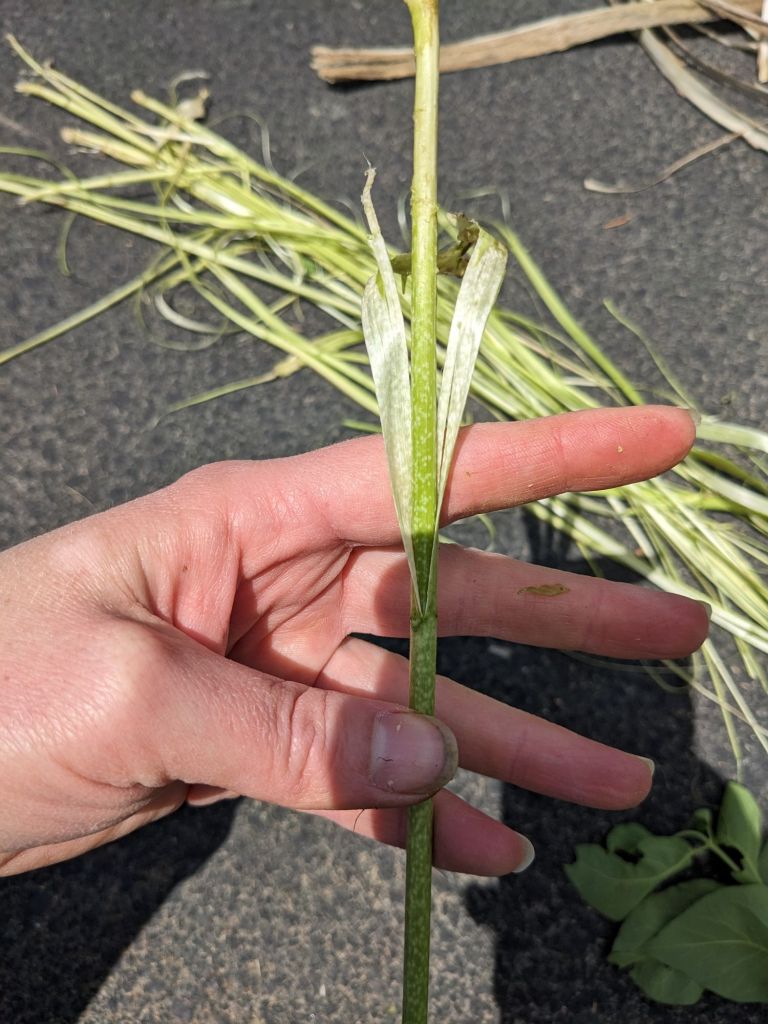
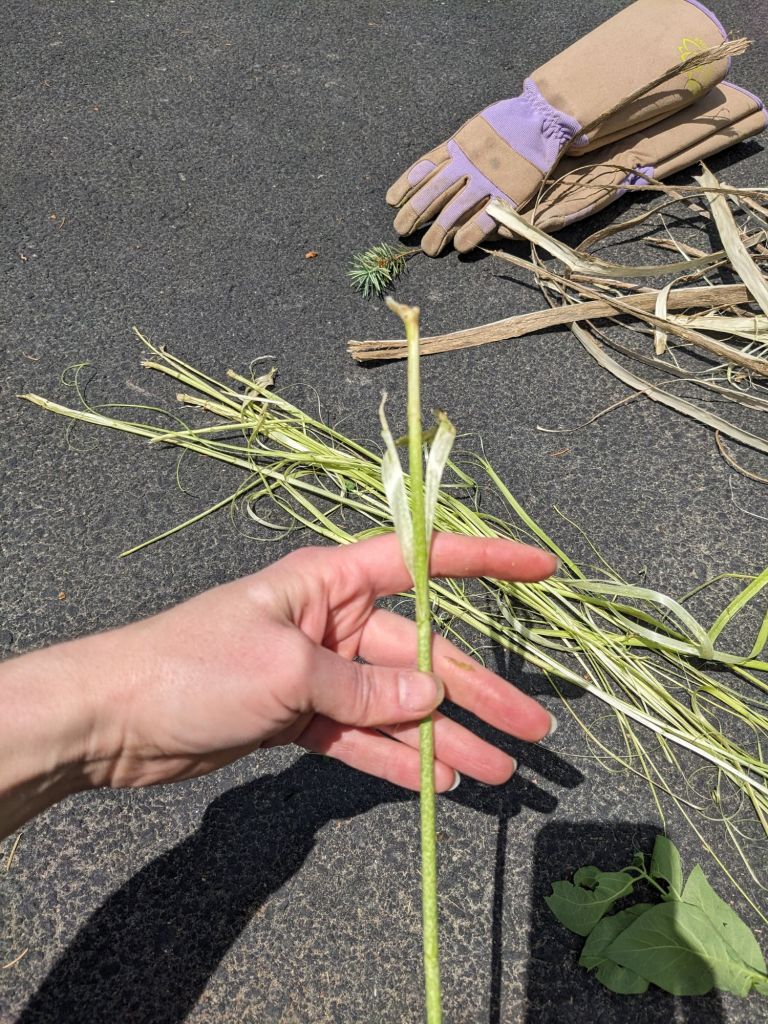
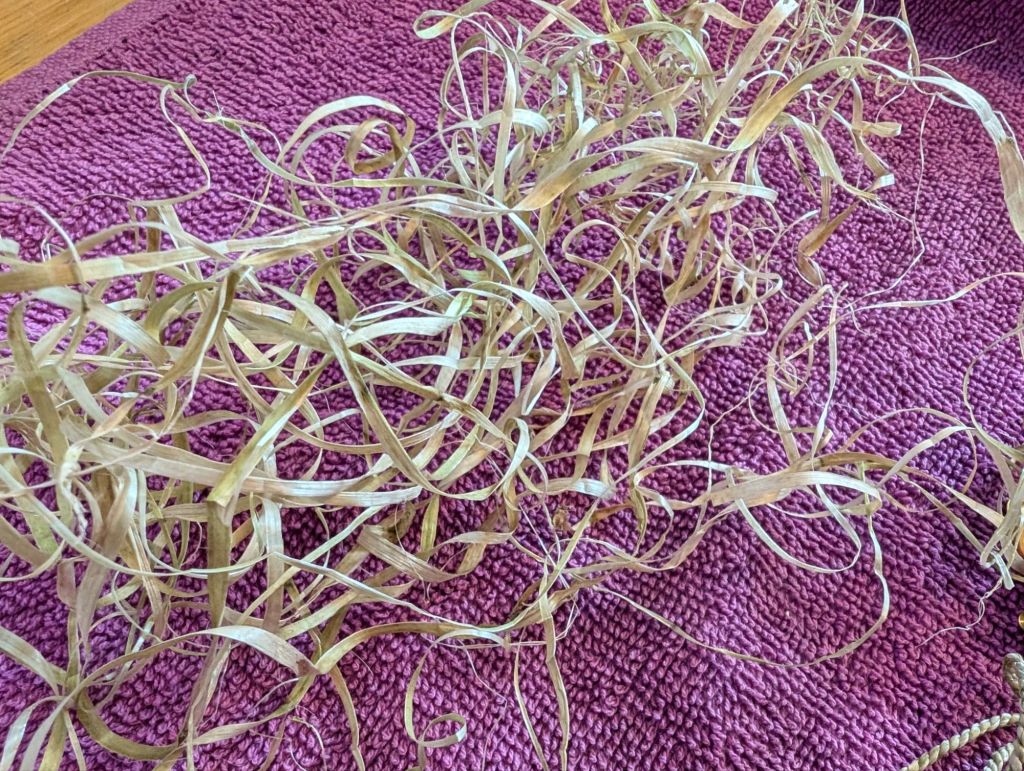


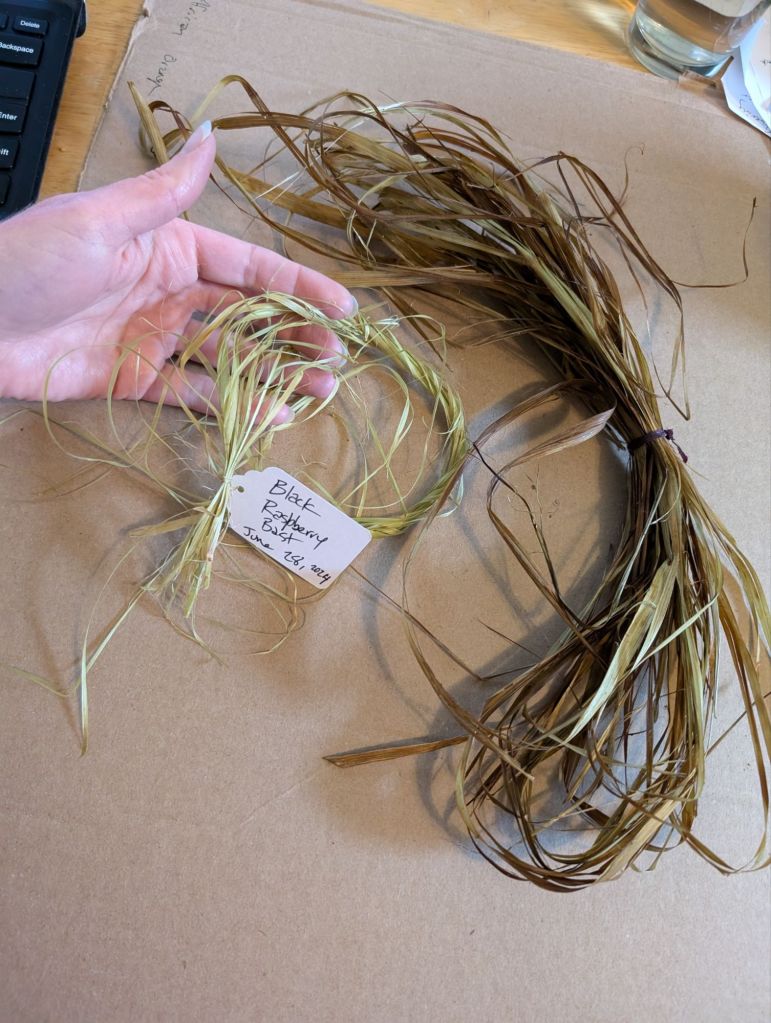
Blackberry/Raspberry Canes
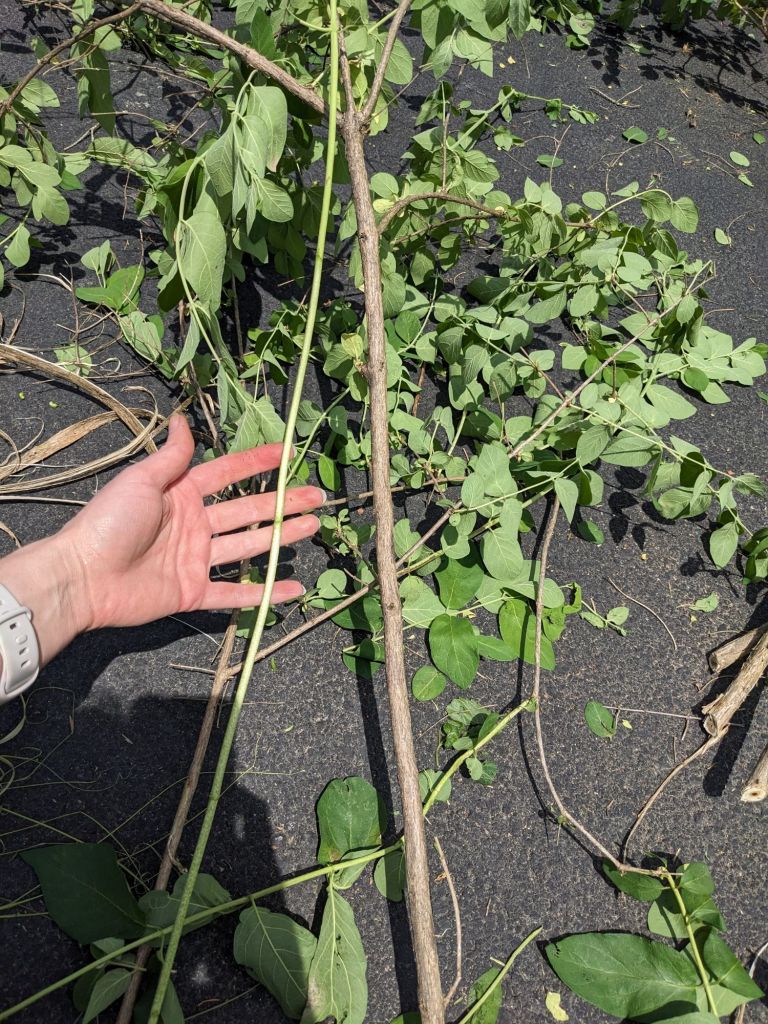
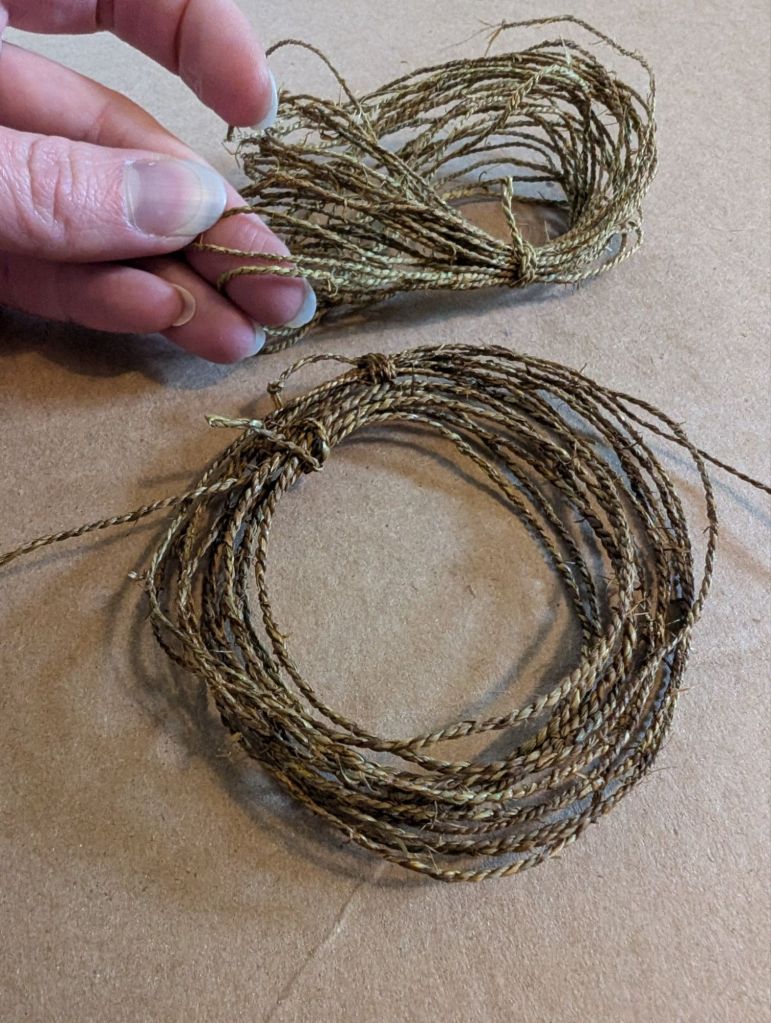
These canes can be native or invasive species, and I happen to have both hanging out around my yard. They also hybridize easily, so it’s quite difficult to nail down an exact species identification. As a general rule for telling them apart without flowers or fruits, raspberries have rounded canes that are smooth except for their prickles, while blackberries have ridges running the length of the cane. The time to harvest these is definitely before the end of June, at least in my area. At the end of June, I got nice green bast strips that came right off the outer bark from the black raspberry, but just a few weeks later I had to soak the bark for a week and then scrape the outer bark away (resulting in the brown color). The resulting cordage is fine and fairly soft, but it’s definitely not worth the amount of work it took to process the ones I cut in July!
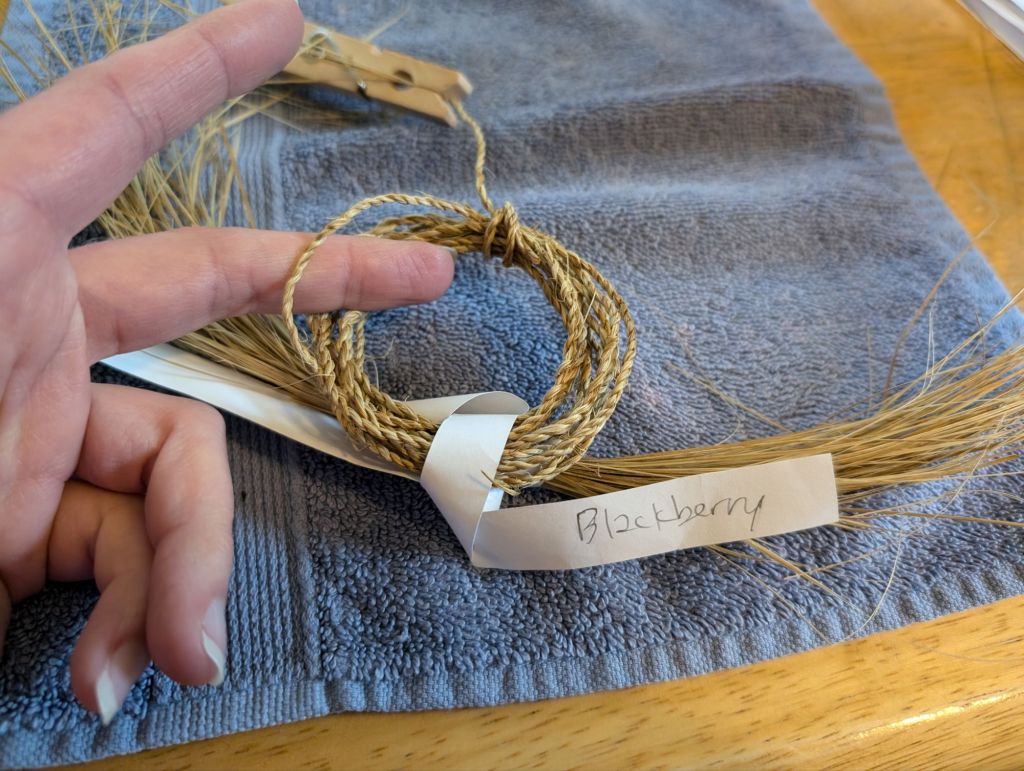
The blackberry cane resulted in a much coarser honey-colored fiber that made a very stiff twine that feels somewhat like horsehair and could probably be used for similar stiffening applications. Hard on the hands when twisting, but it is the only thing I’ve tried that feels this stiff without being brittle.
Common Reed (Phragmites australis)
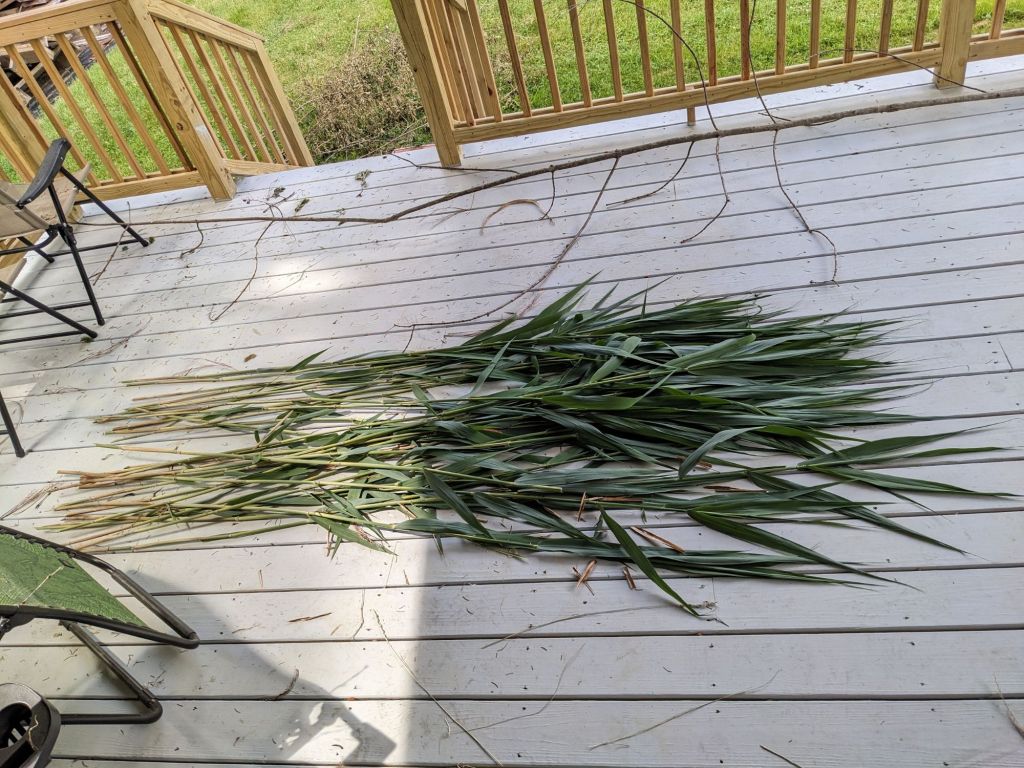
There is a native variety and an invasive variety here, but the native one is quite rare and only known to occur in a limited area of the state, so anything I have access to is likely to be invasive. Thankfully, this is not growing at my house, so I had to snag some from some friends.
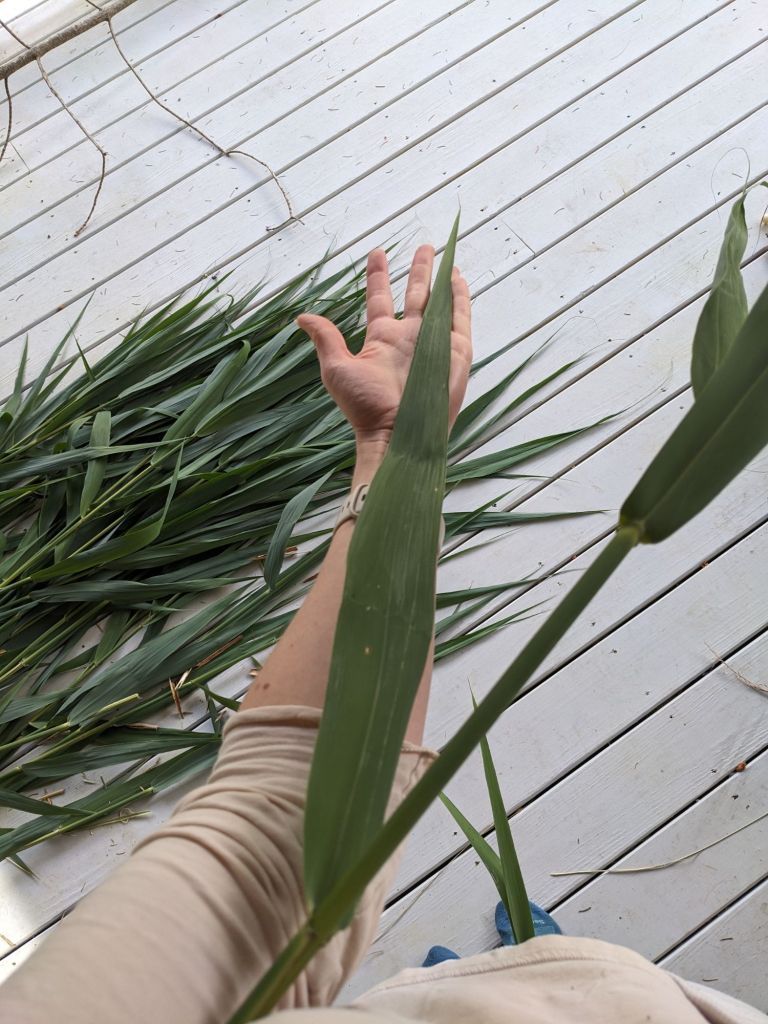
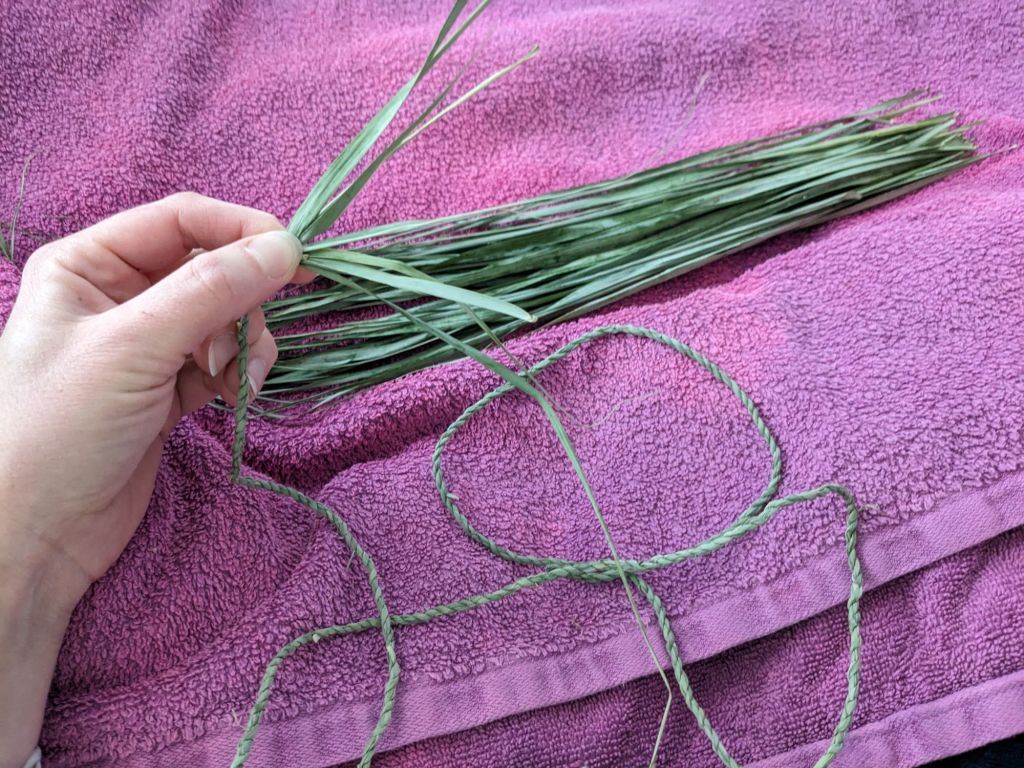
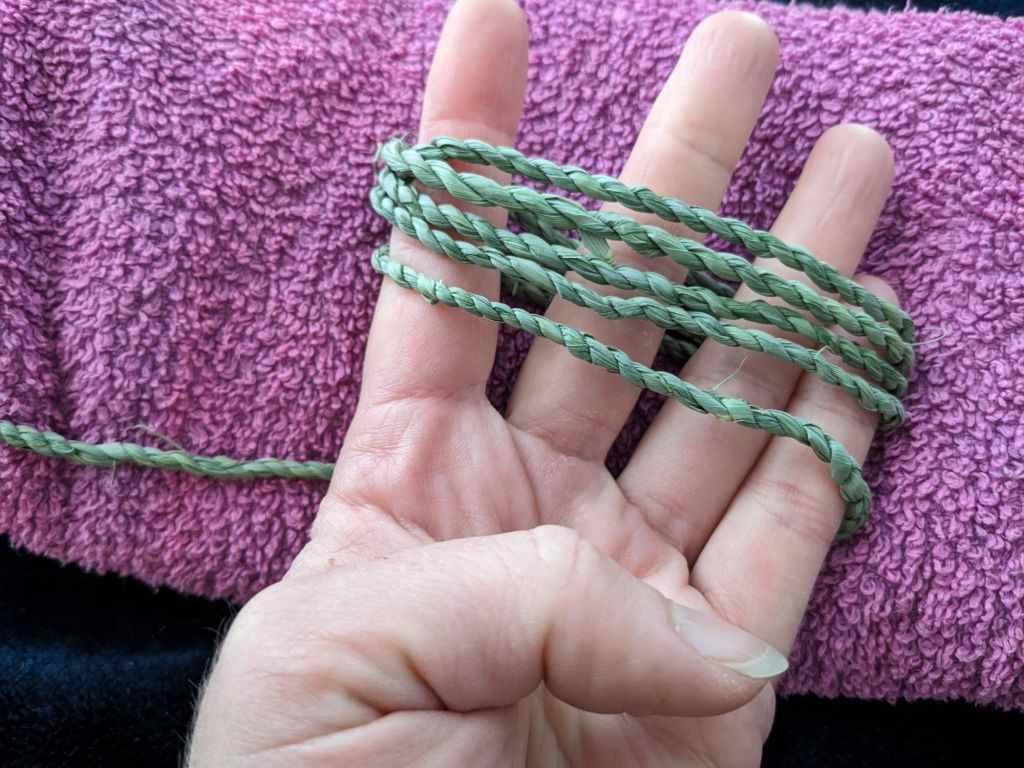
The stem can be used in basketry, but what about the leaves? They were so long I had to try using them before just letting them go to waste. They make acceptable medium sized cord, though it is a bit stiff and would probably not be good for fine applications. It is also fairly rough and a bit tough on the hands to twist up. The color is lovely, and I could see it working well in a basket.
Giant Foxtail Grass
This large, invasive foxtail grass showed up in some garden soil I ordered and has been going strong ever since. I would be happy to deplete it an prevent it from reproducing so much. In addition to experimenting with the leaves for cordage, I recently started playing with splitting the longer stem sections to use like straw.
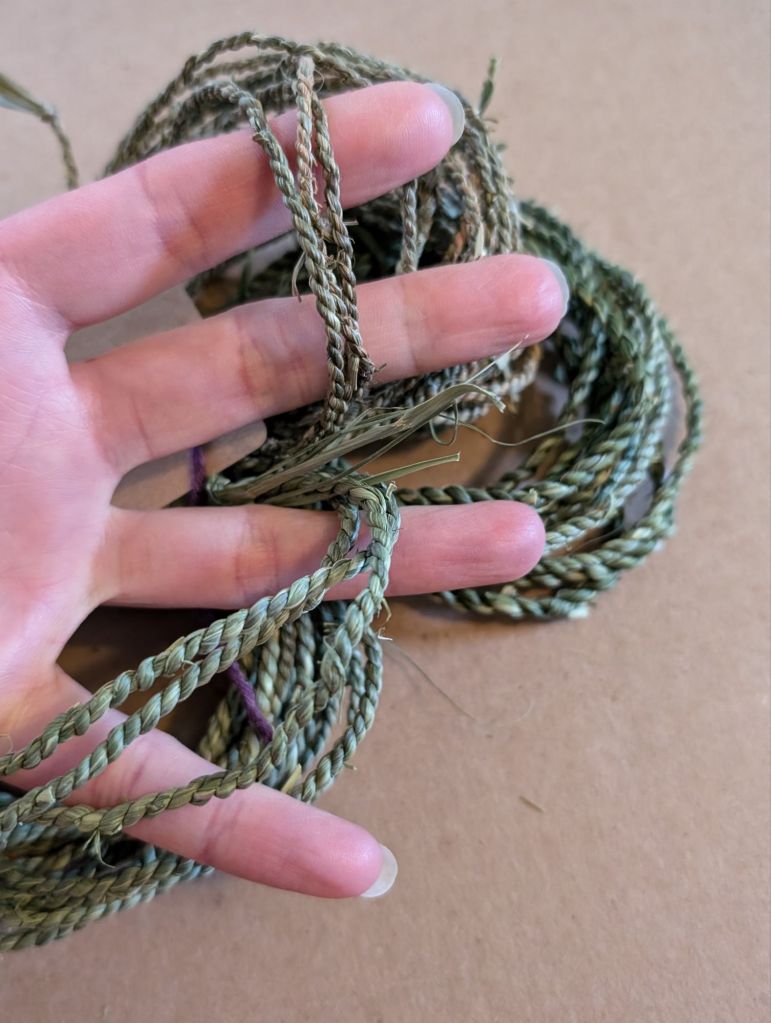
You can dry it or use the leaves fresh. There is very little shrinkage. The coil with more brown in it is made from leaves that were harvested after starting to fade and dried almost a year before making the cordage, while he bright green coils were made from fresh leaves or leaves that had been dry for only a week or so. There’s no noticeable difference between the green coils.
These leaves are hairy, and it really feels like fine sandpaper rubbing against parts of your fingers when twisting. It makes decent cordage, but of everything in this post that I tried, this was the only thing that made me put bandages on my fingers in order to keep going. So if you decide to try it, just be warned that it is quite abrasive.


 Smash the Shell