
I haven’t posted anything here for a few months because I’ve been dealing with a death in the family due to aggressive cancer that was discovered too late to effectively treat. I am working on getting caught up, so you may see some new blog posts and portfolio projects about what I’ve been working on since May. Some things will be backdated to when I posted about them elsewhere, and some things will have summary blog posts pulling individual process updates together into one entry.
This particular project was started in early July, but it is still in progress because I switched to other things for a bit. I started my attempt to learn historical Egyptian basketry techniques by trying to create a lidded oval basket out of palm leaves and grass, based loosely on an extant piece at the Louvre. Specifically, these baskets were often made of doum palm and reed or halfa grass. (Wendrich, Willeke. The World According to Basketry, 1999. https://escholarship.org/uc/item/6n42w0rg.)
Neither of those are particularly readily available in the State of New York, so this is a starting point using grass from my yard and the longest palm fronds I could get shipped to me around Easter.
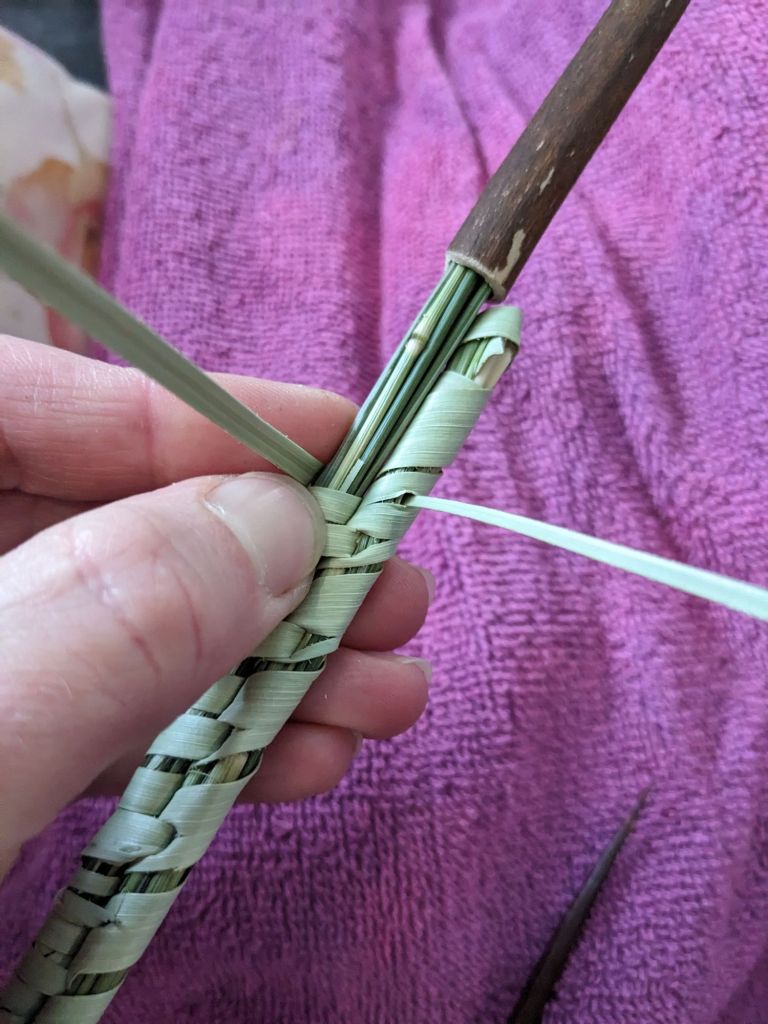
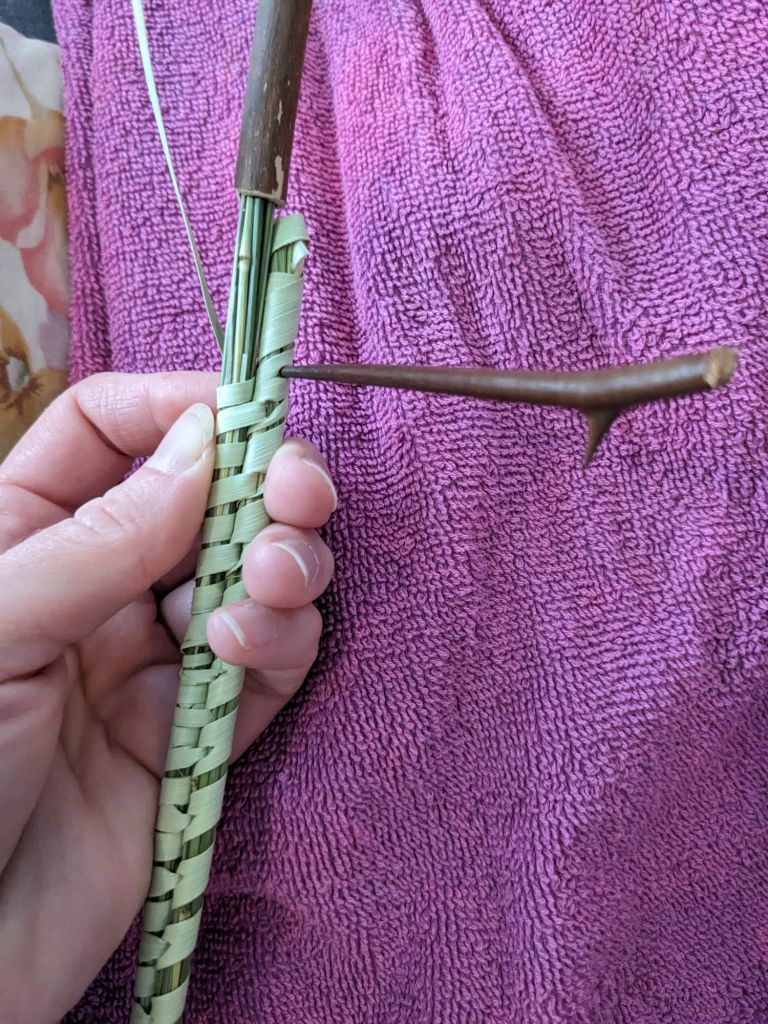

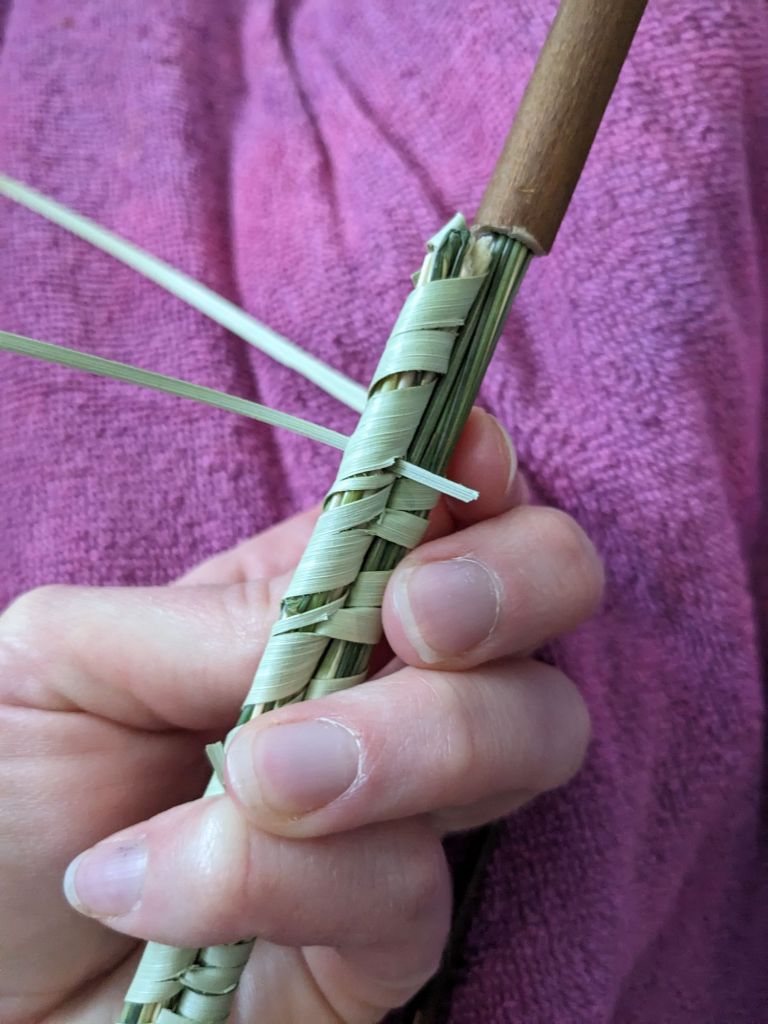
Rather than using a needle, I am making a hole to poke the palm strip through by using a large thorn as an awl. After I got a few rounds done, the shaping of the base got a whole lot easier. This was the point where I had to start really watching the points for increasing the number of stitches at each end to get a decent oval.
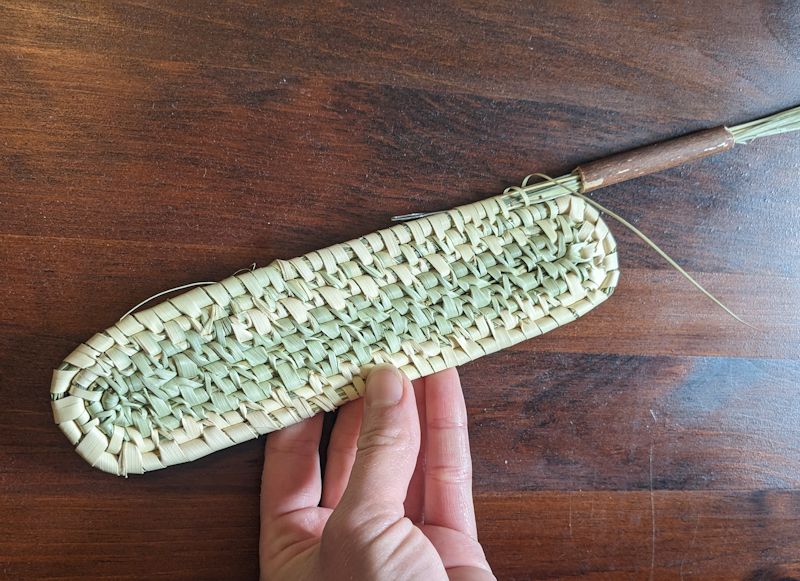
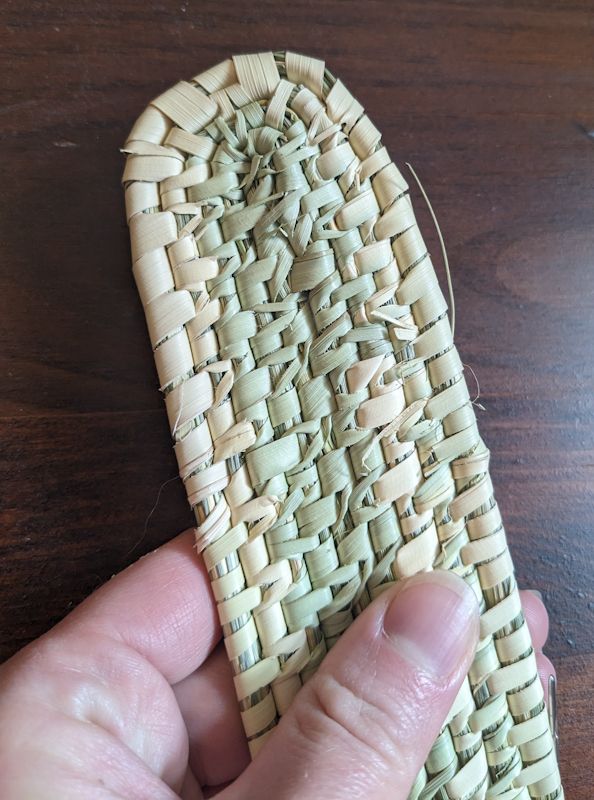
This particular extant basket measures 28.9 cm long and 12.5 cm wide. I drew a rectangle that size on paper and sketched in curves on the ends. Then I periodically checked the basket base against the drawing by putting it on top of he paper. When the base was almost the size of the sketched shape, I stopped increasing stitches and started coiling upward rather than outward.


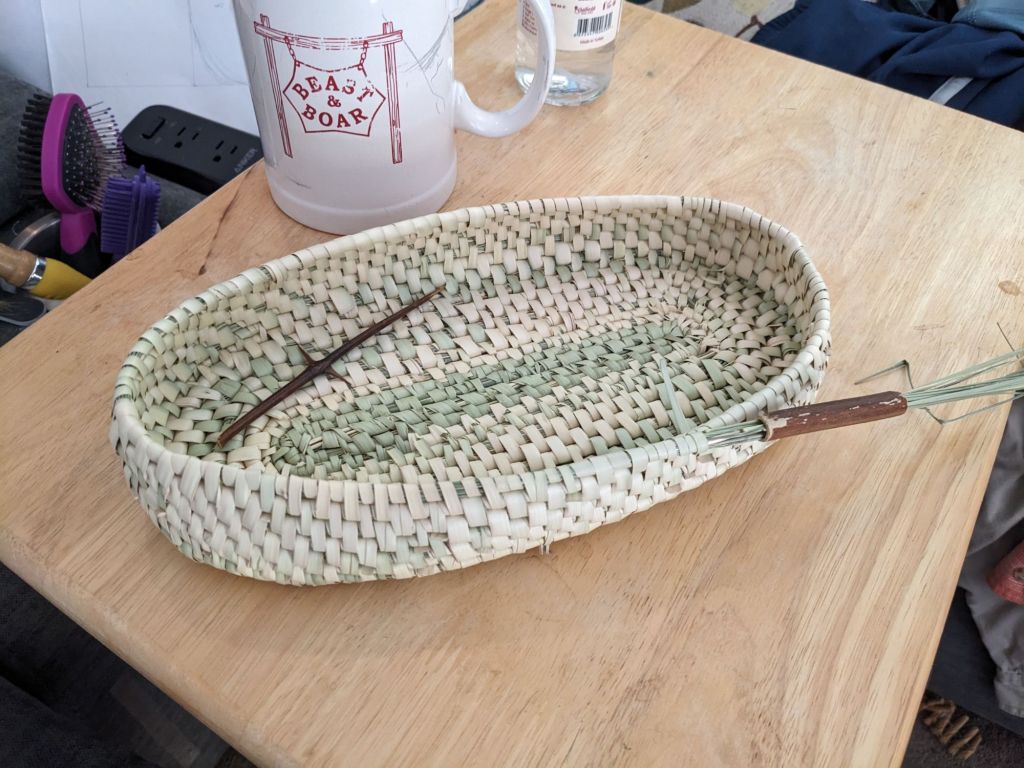
I did stop splitting the stitches from the previous row and switch to long-and-short stitch because this palm leaf is a little too brittle to stand up to the splitting. A softer leaf would definitely be better for this application.
The extant basket is 9.2 cm tall, but some of that height will be made up of the domed lid. This is where I am now, and you can see it needs a little more height before I add an inner lip for the lid to sit on. I will probably get back to working on this after the autumn basket material harvest season wraps up!

 Smash the Shell