
This post is part of a series about a late antique Egyptian-style tunic project, starting with this overview of the tunic and going into the details about several aspects of the tunic in their own posts. Text references are listed at the bottom of this post; extant artifacts are linked directly to museum catalog pages in their captions.
For the sleeve style of my “Buy Nothing” project tunic, there were a few different options — sleeveless, short sleeves, long sleeves that are wide, and long sleeves that are tightly fitted. (South and Kwaspen, 489; Mossakowska-Gaubert, 344-345). I chose tightly fitted long sleeves because they are common in the artifacts found in Egypt from this time period (Mossakowska-Gaubert, 333), and I like the way they look.

The arm covering in this style of tunic is created by having a fitted sleeve around the lower arm and elbow paired with a wide tunic body that poofs down over the top of the fitted portion on each arm. The armpit is not sewn together, which provides flexibility for the fabric draping over the upper arm. These open armpits also provide a way to wear the tunic without the tight sleeves — the wearer can put their arms through the armpit openings instead. (Rooijakkers, 177; see also worn replica at Ref. 4 and reconstruction at Ref. 5.)


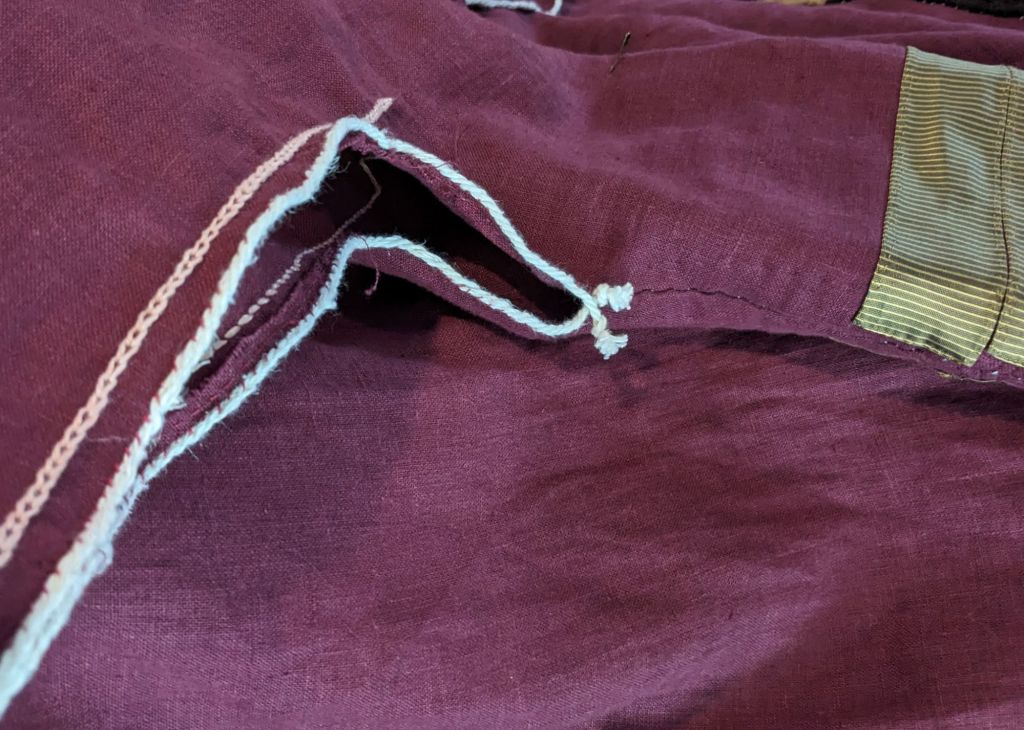
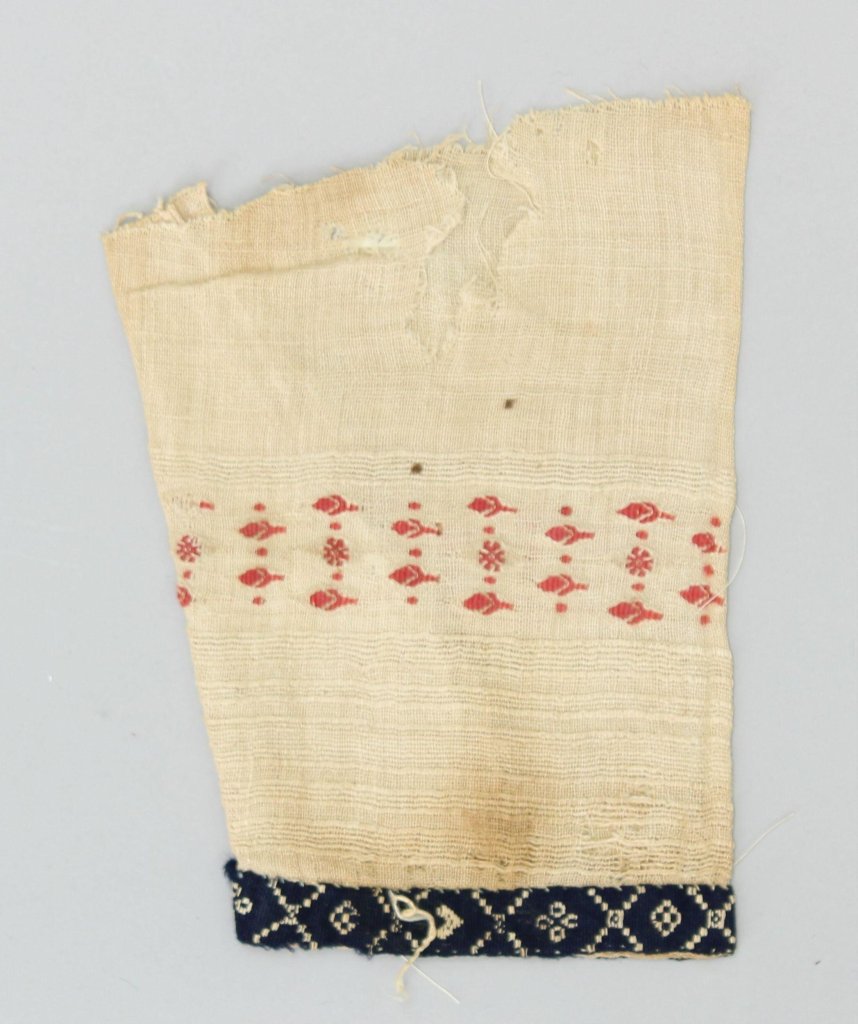
Since woven fabric took a lot of effort to create, the tailoring techniques used to fit tunics to their wearer tended toward making folds and sewing them down to avoid cutting the fabric. This made it possible to unfold the fabric and re-fit it later if a person changed size or the garment was given to someone else. (You can see more about this in my post about the Base Fabric and Fitting of the tunic.) Based on a survey of photos of extant items in various digitized museum catalogs, I concluded that the fitted sleeves often started out as rectangular sections of woven fabric, and triangular sections on each side were folded to the inside to create a taper from the elbow to the wrist (see examples below). There were some examples of sleeves with the taper woven in, but they appeared less frequently among the examples I found.
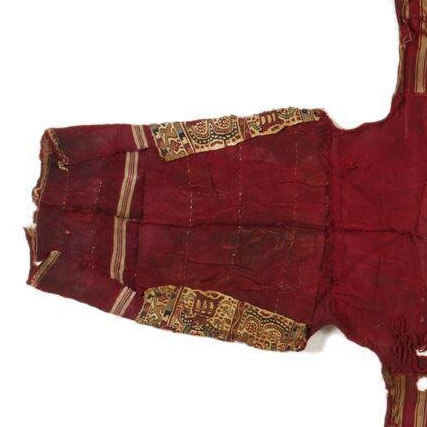
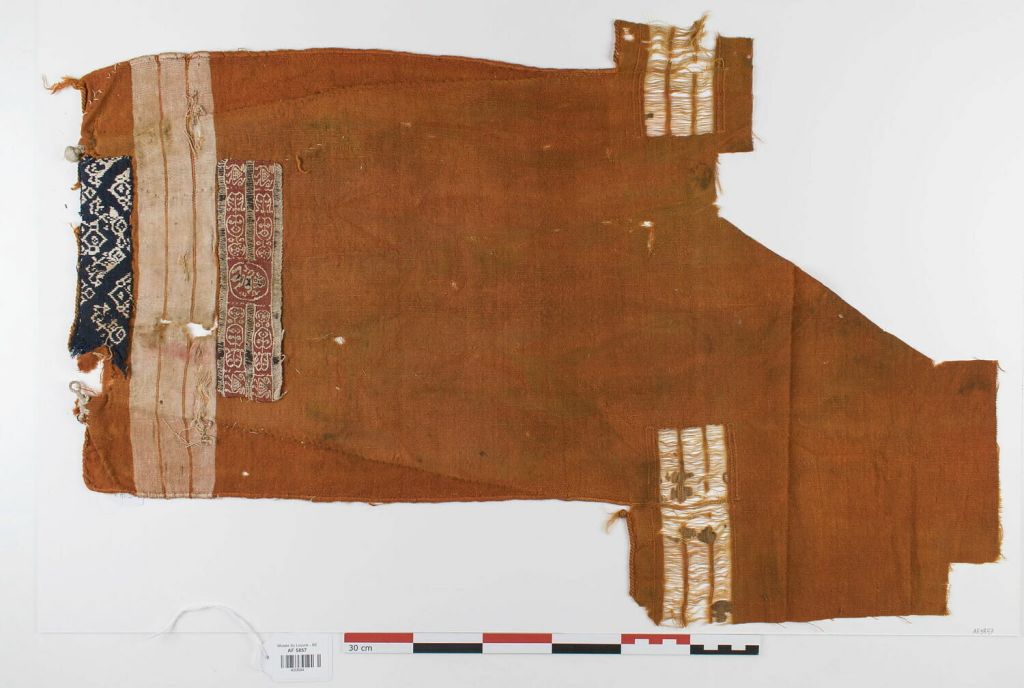
More examples:

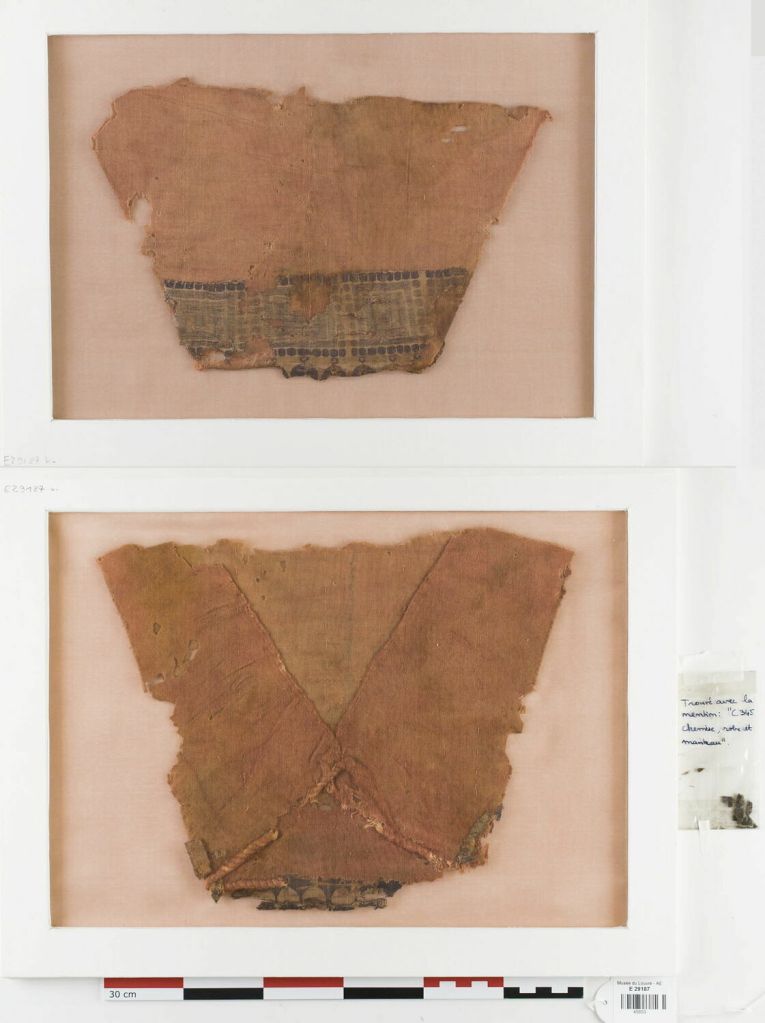

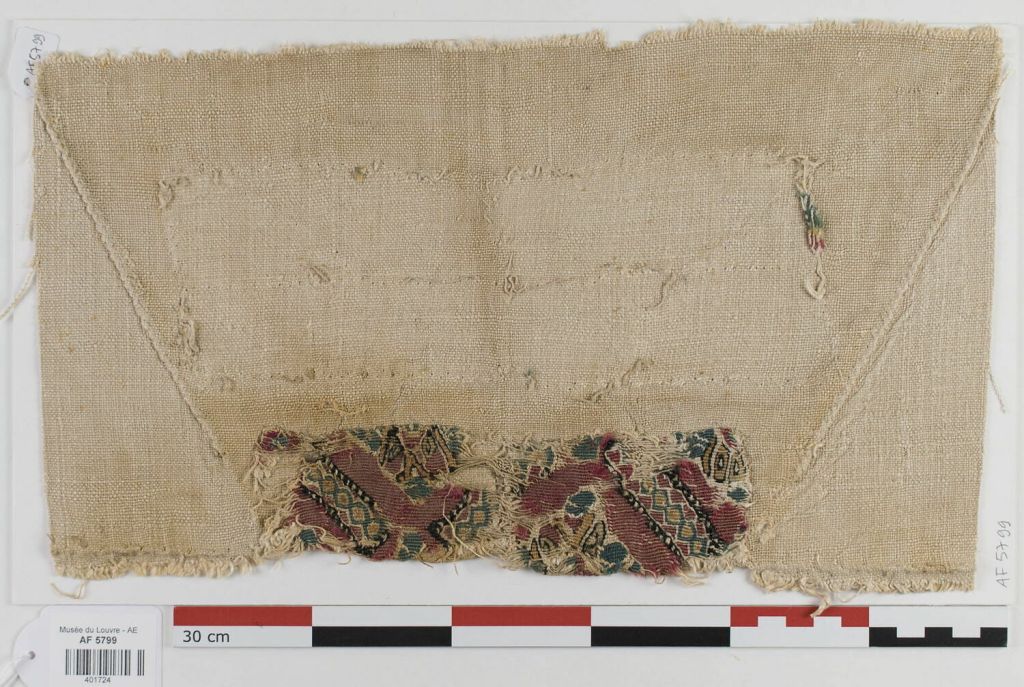
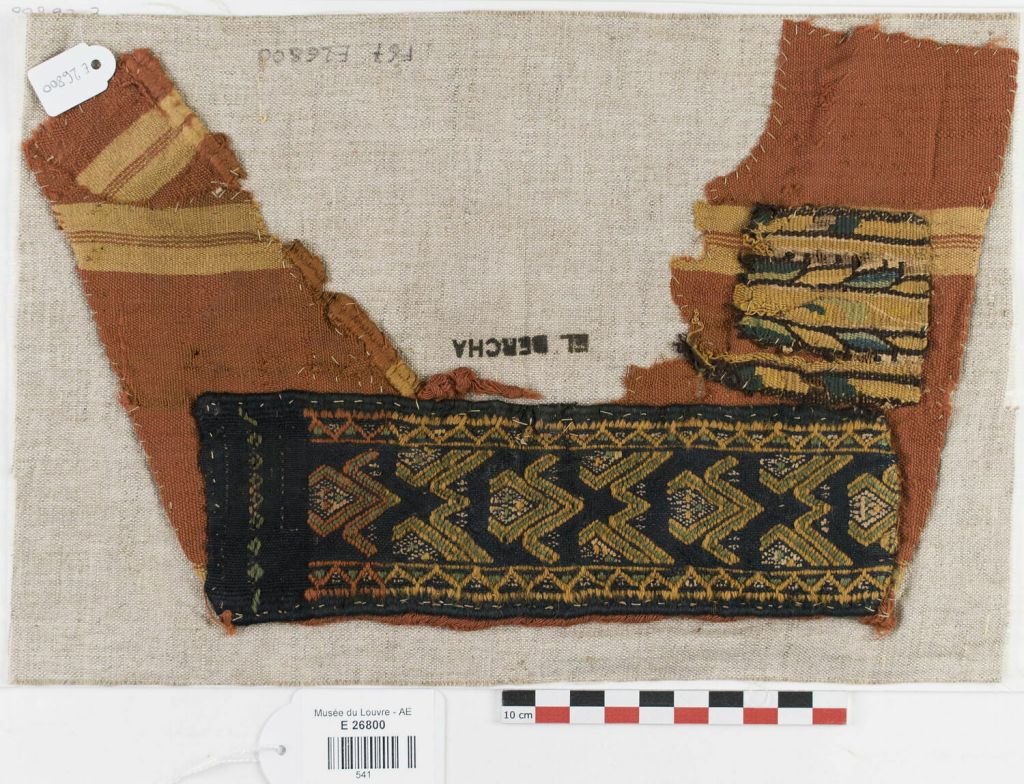
For my tunic, I used linen thread pulled from the fabric to sew the triangles down so that the stitches would blend in on the outside of the sleeve.

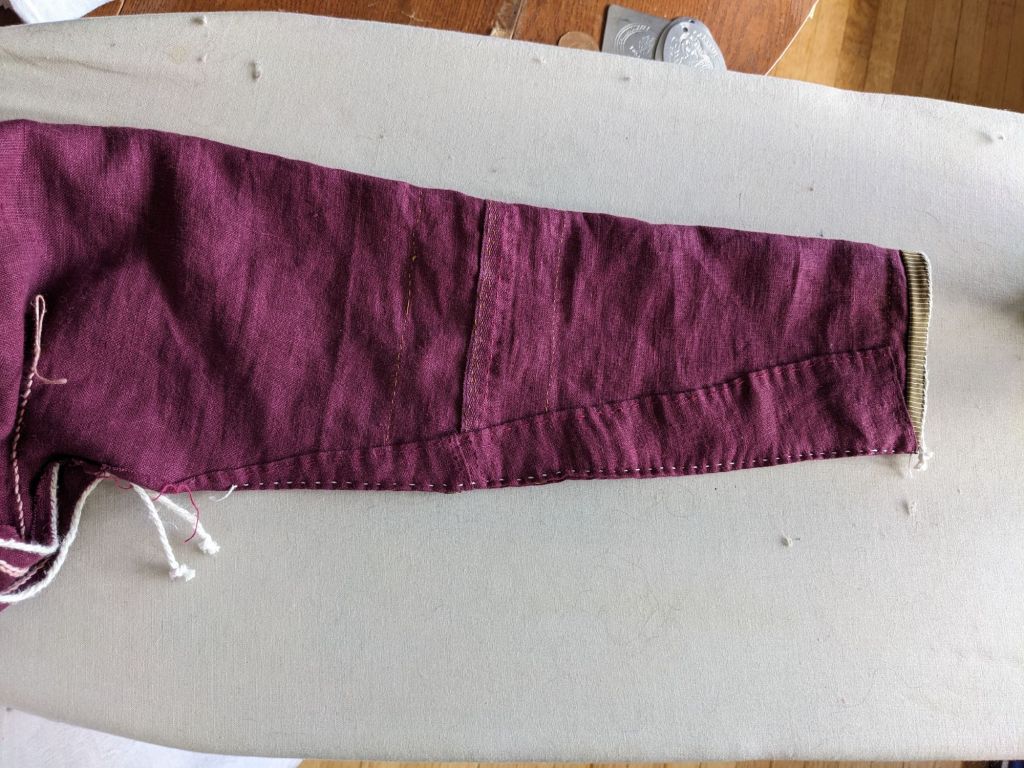
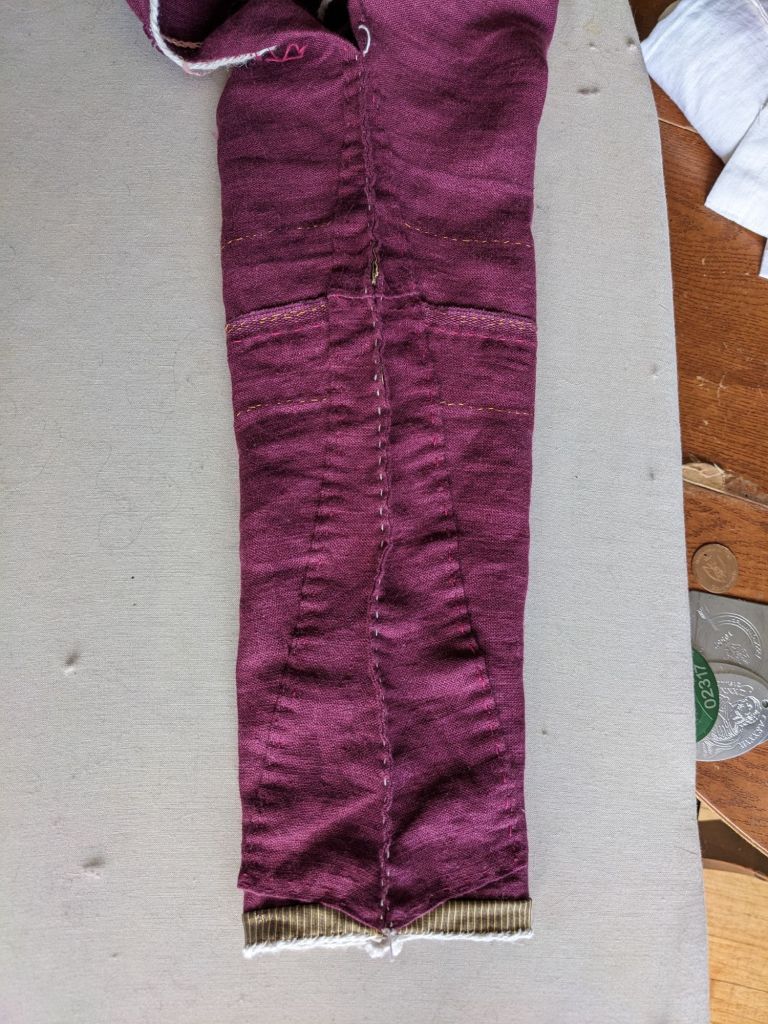
These sleeves often had woven bands woven into the fabric or applied around the wrist and cuff of the sleeve, and sometimes along the middle of the arm as well. (See photo examples above and below.) These bands tended to be woven with designs created by broaching, tapestry, or tablet weaving. Sometimes the applied bands were woven as bands originally, and sometimes they were cut from a larger piece of fabric. Not having access to these kinds of authentic fabric patterns, I used a woven silk tie that I unstitched and cut into strips to use for trimming the tunic.
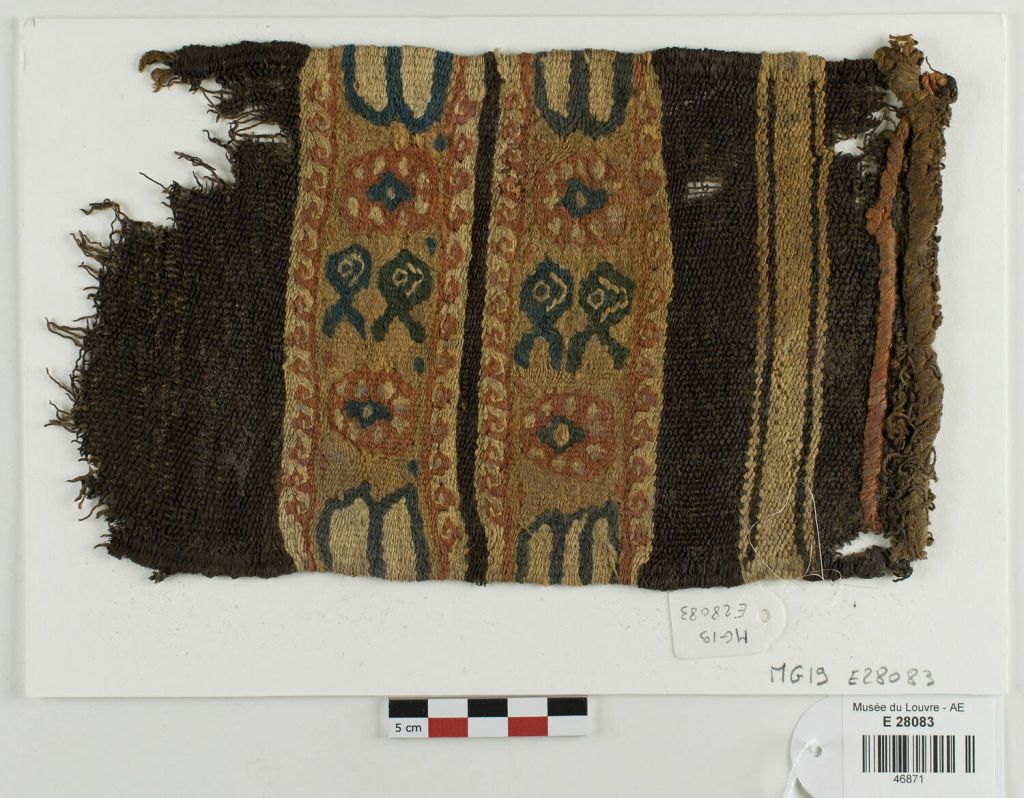
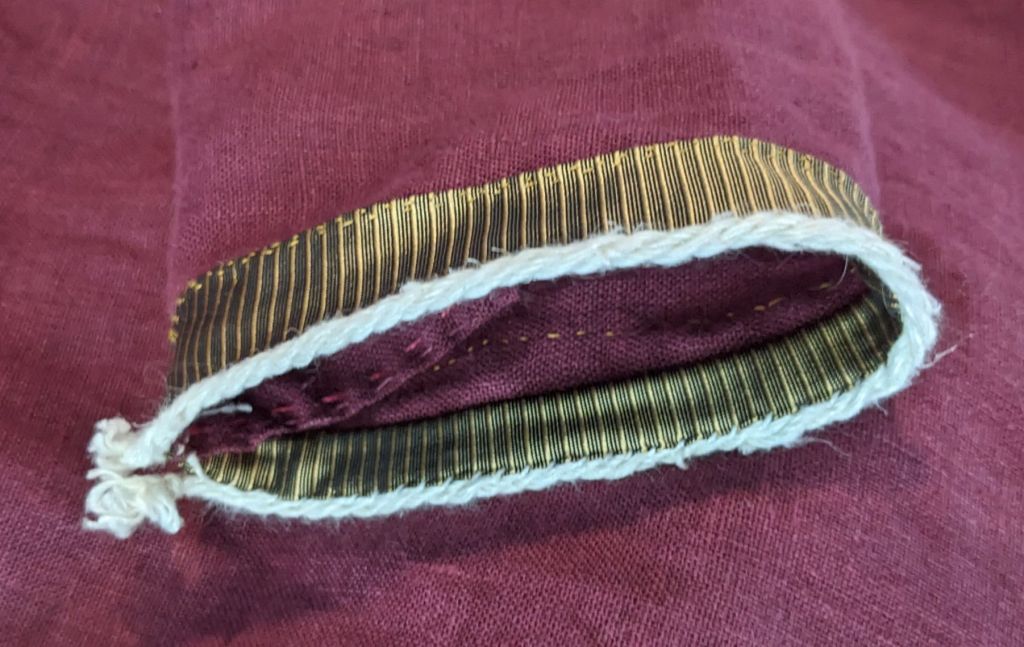
The cuff of the sleeve sometimes had a protective or decorative cord sewn on, as shown above, or it may have had a twined “cord” created by the woven treatment of the warp edge. (See Base Fabric and Fitting post.) I created a cord for this edging by plying strands of linen weaving thread together and sewed it onto the outer edge of the cuff. The same cord was used to edge the body “selvedges” and reinforce the edges of the open armpit.
After wearing the tunic, I think I made the sleeves a bit too long. They come up my arm a few inches longer than is optimal and have to be pinned at my bicep to stay up, which changes how the sleeves poof.
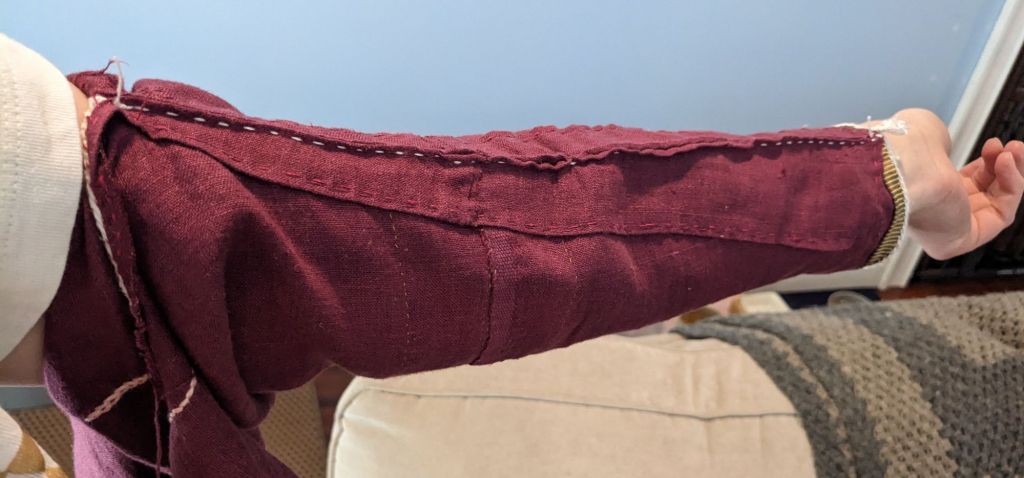
The construction method helps me out with fixing that when I have time — I can unstitch the seam and the triangle folds, put in a tuck to take up a bit of the upper sleeve area, and then sew new folds and a new seam to close up the sleeve. I will try that and see if it works better!
References:
1. South, Kristin, and Anne Kwaspen. “The Tunics of Fag El-Gamus. A Survey of Types.” Proceedings of Purpureae Vestes VII. Redefining Textile Handcraft Structures, Tools and Production Processes, January 1, 2021. https://www.academia.edu/57096151/The_tunics_of_Fag_el_Gamus_A_survey_of_types.
2. Rooijakkers, Tineke. “New Styles, New Fashions: Dress in Early Byzantine and Islamic Egypt (5th-8th Centuries).” New Themes, New Styles in the Eastern Mediterranean: Christian, Jewish, and Islamic Encounters (5th-8th Centuries), January 1, 2017. https://www.academia.edu/9112805/New_Styles_New_Fashions_Dress_in_Early_Byzantine_and_Islamic_Egypt_5th_8th_Centuries_.
3. Mossakowska-Gaubert, Maria. “Tunics Worn in Egypt in Roman and Byzantine Times: The Greek Vocabulary.” Textile Terminologies from the Orient to the Mediterranean and Europe, 1000 BC to 1000 AD, January 1, 2017. https://digitalcommons.unl.edu/texterm/20.
4. “Egyptian Tunic from the 7th-8th Century. Process of Conservation at the V&A – Nationalclothing.Org.” Accessed April 30, 2024. https://nationalclothing.org/africa/67-egypt/474-egyptian-tunic-from-the-7th-8th-century-process-of-conservation-at-the-v-a.html.
5. Stoner, Jo. “Making Late Antique Clothing.” Visualising Late Antiquity: (blog), May 16, 2014. https://visualisinglateantiquity.wordpress.com/2014/05/16/making-late-antique-clothing/.
 Smash the Shell