
Let’s talk about the SCAdian Stashing Problem.
Obviously, this is not an issue solely limited to SCA participants, but it is very common among artisans in the SCA. We learn a new thing and acquire a bunch of supplies to do it. We see fabric that would make gorgeous garb and purchase it to add to the stack of potential. Yarns, trims, leather, looms, lumber, and BOOKS, oh my word, the books.

Eventually it gets to a point that you have more than you can feasibly use. You start putting things in bins to store for years at a time without ever using anything inside. You start pushing things to the back to make space to store the new supplies you bring home. And when you want to do a project, you end up just buying specific materials for it because you can’t find/access/remember the stuff in your stash. This also gets to be a problem when we aren’t around anymore and someone has to go through all of those supplies to figure out what the heck to do with them. “They who die with the most craft supplies” … never got a chance to use the Good Stuff they were saving for the perfect project. That’s all. That’s not a win.
If this sounds a little too familiar, join me in a SCAdian stashdown challenge to celebrate creativity, ingenuity, and the concept of substitution. And above all, USING THE GOOD STUFF WHILE IT’S STILL GOOD!

So… I’m officially issuing a Buy Nothing Project Challenge.
It goes like this:
(1) Go look at your current stash of materials. (If you are like me, this is a multi-room endeavor that involves getting assistance with lifting bins on and off shelves.) **Newcomer variant form: adopt a stash from a friend, or several friends, with their consent. As long as stashed materials are turning into active and finished projects, you’re good.**
(2) Come up with something you want to make using only stash materials that you can work on for enjoyment and not out of obligation to someone else. This includes tools and anything else that will take up more space – the idea is to add nothing to your collection!
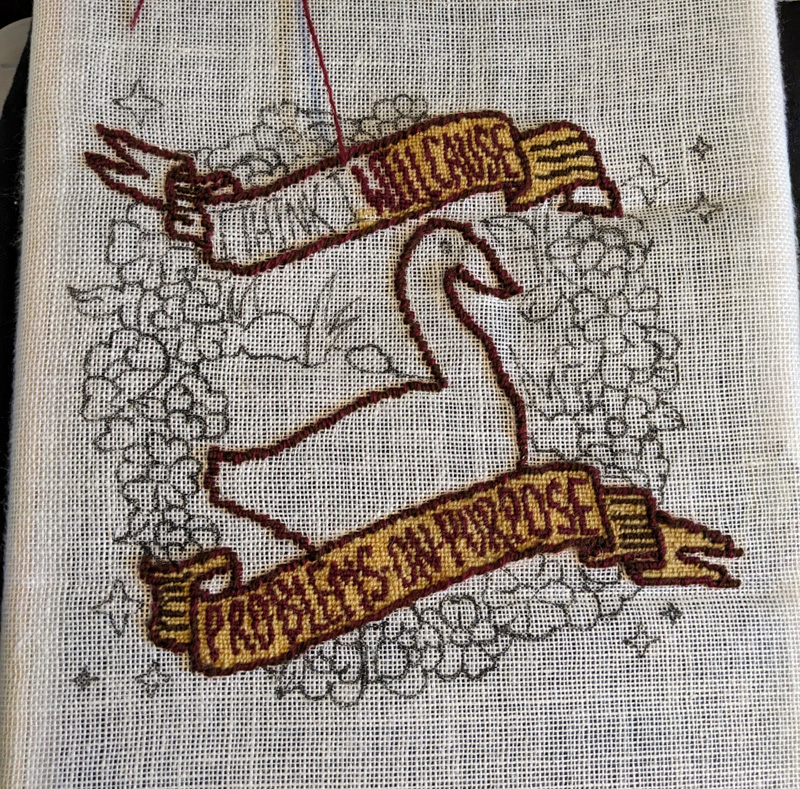
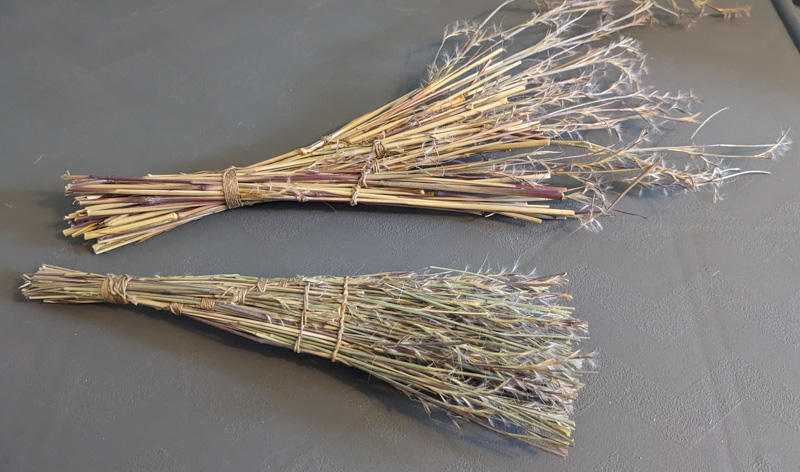
(3) Pull out a pile of the materials you think you might use. It’s okay if you are not fully decided on whether to use a particular thing. Put it with the pile anyway. Take a picture of your pile. Share it if you’re feeling confident. (It’s okay if you’re not.)

(4) Look at what you have and assess the quantity of the major materials to refine your concept and come up with potential ideas for substitutions using your stash. For example, do you need a certain style of trim that you don’t have? How could you transform/combine materials you already have to get something with the right feel? Make some notes on your ideas to help you out later.
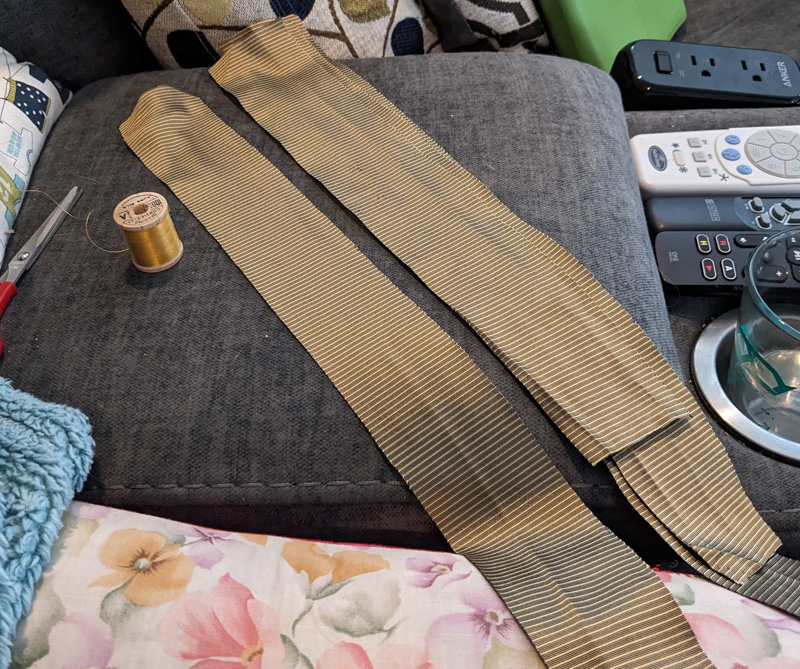
(5) Figure out which elements of the project have special needs: Can they be portable handwork? Will they be fiddly and/or take a substantial amount of time to complete? Will they create bottlenecks if not completed up front because they will stop progress and kill momentum on the project? Those are your priority steps to work on first.
(6) GET STARTED! I like to choose several of the priority elements and set them up in project bags so I can switch between them when I get bored/frustrated/hand crampy from one of them. Do whatever works for you. (Remember that you can change your mind about using a material or how you are going to substitute at any point. If you try your idea for a substitution and it’s not working, you can scrap it and try something else.)
(7) KEEP GOING. Take pictures as you work through various elements of the project. Share your progress. It doesn’t matter if it’s not advancing quickly. The important thing is to keep it moving and not let it become a stashed UFO (unfinished object). Share your creative substitutions. Share the obstacles you encounter and what you’re doing about them.
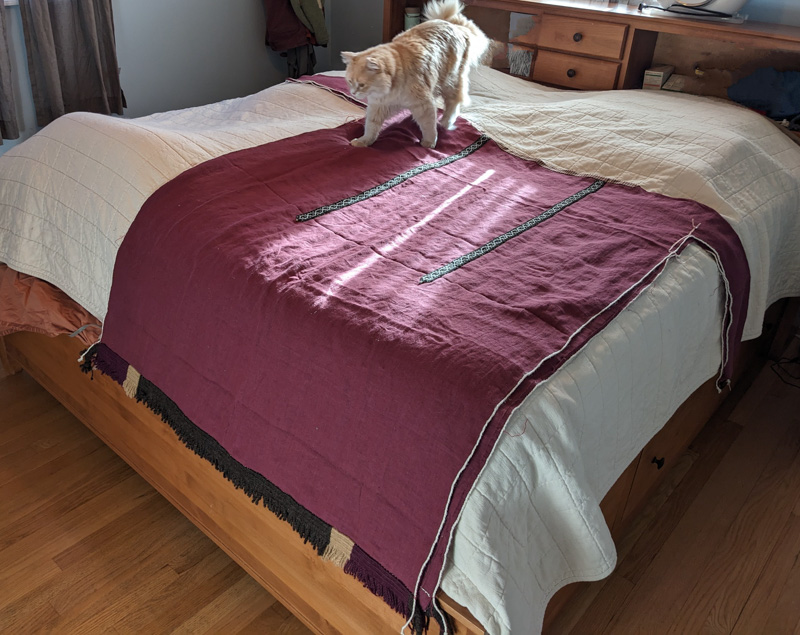
(8) Finish that project and SHOW IT OFF! Take pictures. Brag about all the things you used up from your stash. I want to see/hear all about you doing the thing!
My tunic is almost complete (enough to wear to its first event), so I will share pictures of it being worn and not sitting on a sad fabric shelf after the event.
One caveat to the “add nothing to the stash” rule: If you encounter a blockage that will stop your project because you do not have anything that will work, such as completely running out of needles or breaking a necessary drill bit, it is better to go get the thing you need than to let it stop you from moving forward. See if you can borrow, trade, or get a donation from a friend’s stash… but you can buy if that doesn’t work out. Don’t let the perfect be the enemy of the good!
********
UPDATE: Enough interest has been expressed that I’ve created a group on Facebook called “Buy Nothing Project Challenge – SCAdian Stashdown” for folks to come play. Feel free to look it up and request to join.
 Smash the Shell
Response to ““Buy Nothing” Project Challenge”
I am definitely going to do this!! Great idea, thank you for the suggestion and all encouragement.
Elizabeth LeClair
LikeLike