
Obviously, the best way to plan is to start with a huge, time-consuming goal that will require years of research and practicing techniques and subsequent construction and maintenance. Then you can work backwards from there to plan your intermediate projects and milestones. That’s how everybody does it, right? At least I had the sense to find a teacher with a reasonable grasp of the subject area I was getting into: Master Angus Pembridge agreed to take me on as a student and help me navigate the peril-fraught world of manipulating wood, dirt, and green things while also, and this is key, writing about it and sharing my findings and new skills with the rest of the SCA!

Okay, so quite possibly I did not know what I was getting into when I decided to build a period garden. I thought I would research types of gardens, pick one, research period plants appropriate to that type of garden, plant them, and have a lovely garden to enjoy and maintain. Sounds simple! But alas, when I got to the “lay out my garden” step I discovered that I had next-to-nothing describing layout, containers, beds, or supports. I searched for references to these structural details, but they were few and far between. The closest I got were references to the walls and fences around gardens, or what to use to prop up onions that were flopping over. This called for a different approach!
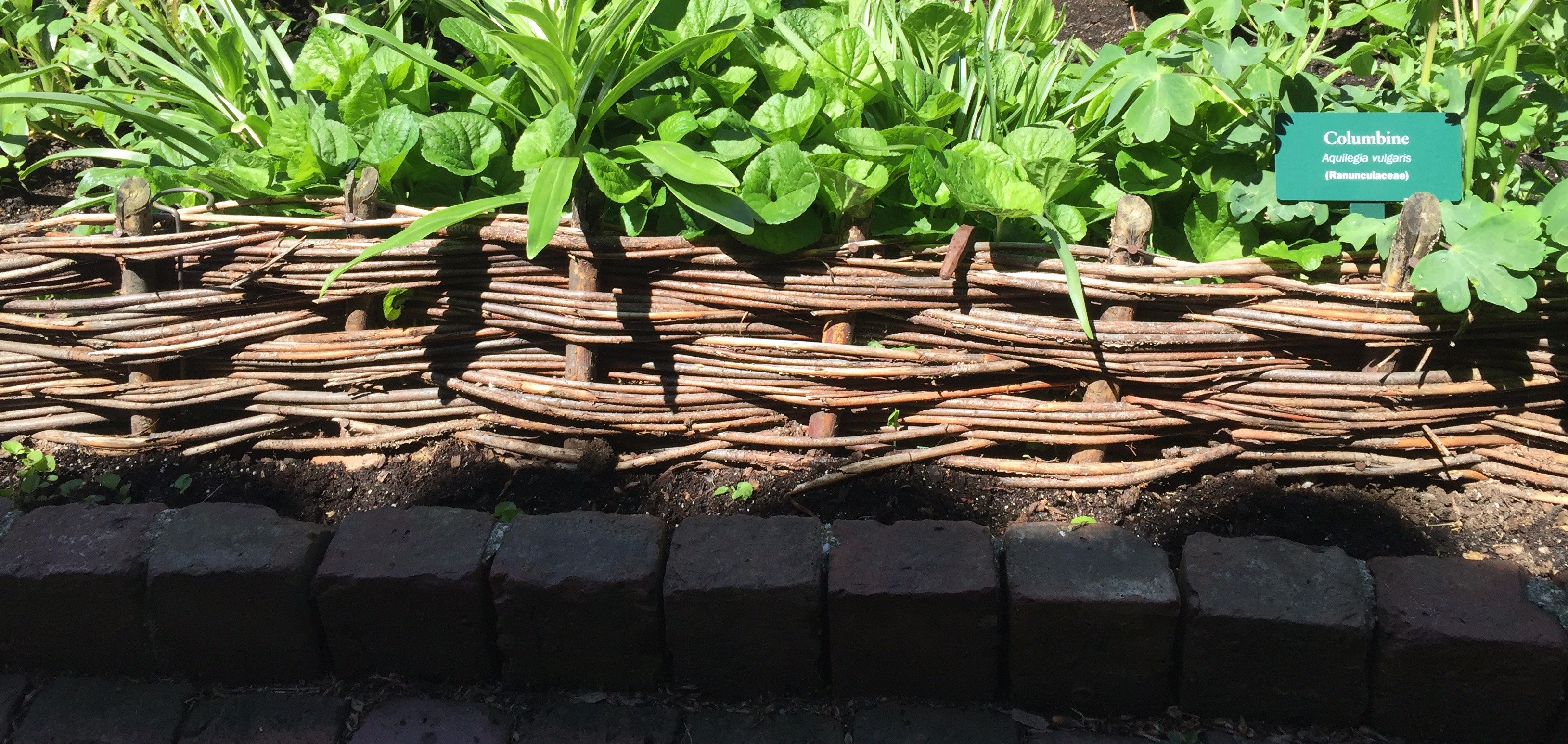
First, I arranged a visit to the Met’s Cloisters in NYC to scope out the gardens. They had garden structures aplenty, though I could not dig up any direct references for most of those structures on my own. I will have to contact them to see if they have specific sources for their designs or if they are simply “inspired” by medieval techniques. Their woven and bent structures were of particular interest to me, especially the small trellises and plant cages. They also had small wattle panels called hurdles, which they placed decoratively around garden areas to designate “beds.”
With the inspiration from the Cloisters, but still lacking written references, I turned to the illustrated record. Most surviving illustrations are from later period than my persona, but they are still a reasonable starting point for examining techniques and arrangements. Initially, I had trouble finding images because I tried to start with keyword image searches. Alas… PINTEREST. Pinterest is the bane of my image-searching efforts. At least 95% of the images I found via image search were from Pinterest collections with little or no attribution to tell me where they came from. Which I suppose is fine if you are just looking for inspiration, but when trying to do academic research with citations to primary sources, it is harder to track down the source when people are just sharing it repeatedly with no attribution.
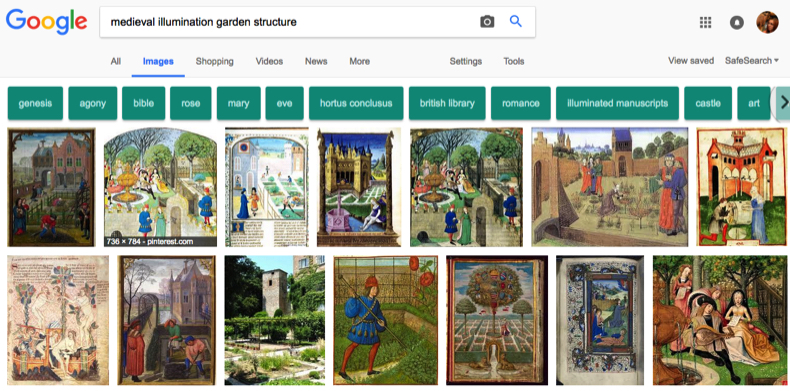
Eventually, I started visiting the websites of museums known for their illuminated manuscript collections. As more and more of these manuscripts are being digitized lately, the online collections are yielding a wealth of information (not to mention fodder for the basis of SCA award documents!). I made much more progress browsing online exhibits or just going through thumbnails of illuminated manuscripts than I had with image searches. Books of hours and woodcut prints were particularly illuminating. (HAHAHA!)

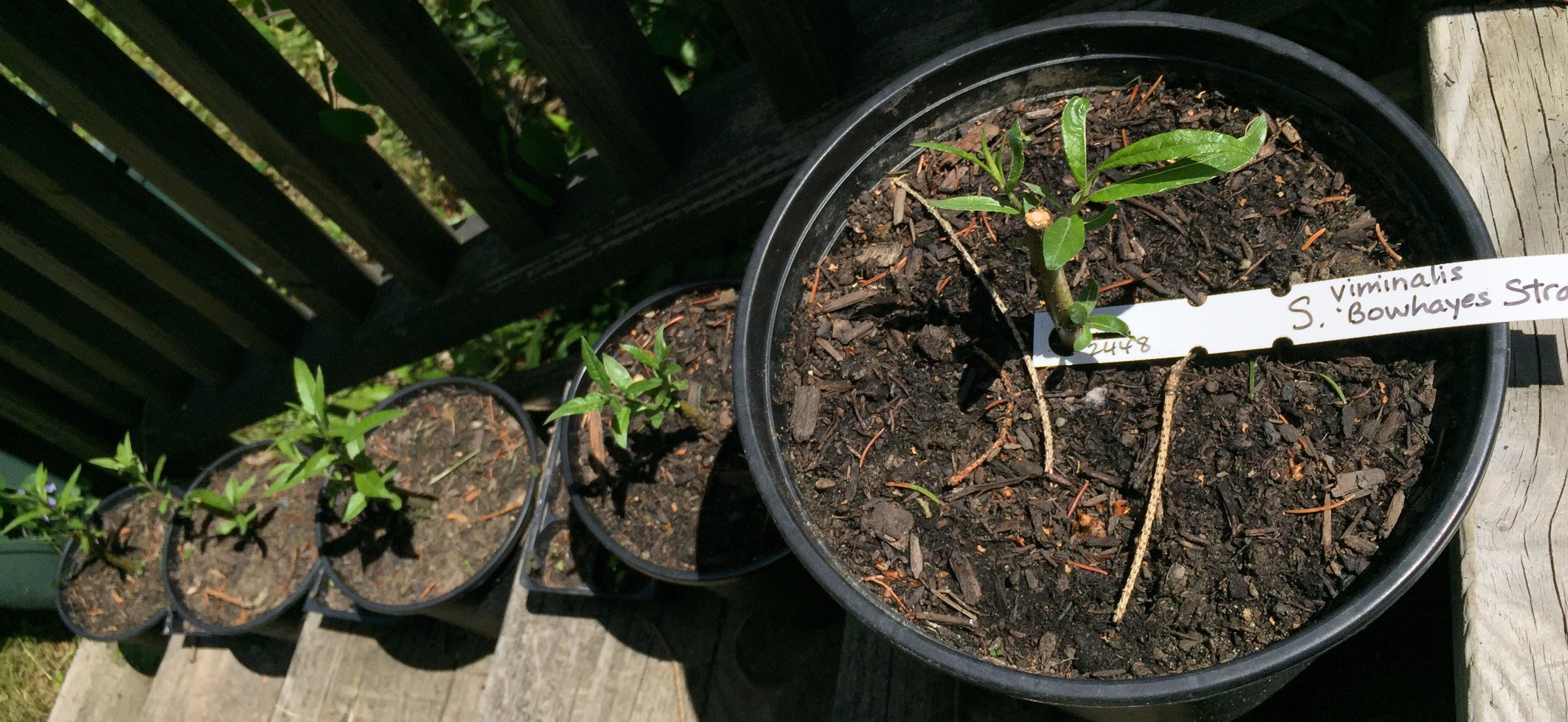
Now that I have a better grasp of the scope of this project, I have a plan to experiment with individual elements over a few years, starting with small practice pieces to get a handle on technique and progressing to making larger, practical pieces that will actually go into the garden. I am going to focus on the wooden infrastructure, lay out the garden, and start filling it in as I get pieces constructed. To that end, I have started growing willow and hazel to coppice for materials. Assuming they survive the winter (these photos are from spring; the plants are in the actual ground now), that plantation will be another element of my project.

Thankfully, Master Angus helped me break the timeline up into mini-projects that can be their own discrete displays, so I can document my progress and start sharing with people before I get a finished, photographable garden in place. My first exhibit was at St. Eligius (2017), which was my first A&S competition ever and my first time actually writing documentation of any sort beyond a quick note to identify the source of a design. That event was all of the positive things people said it would be, and it was super fun and inspiring to see what other people were working on and to put my first practice pieces out there and talk to people about them. Now I just have to keep going!
 Smash the Shell
Responses to “The Ambition: an overview of the goal”
If you include the phrase in your image search phrases, you won’t get hits on Pinterest pages.
LikeLike
Oops, sorry; I guess I confused WordPress with those angle brackets.
If you use the term “-pinterest” in your image search phrases, you won’t get hits on Pinterest pages.
LikeLike
That would have been useful to know. XD But hey, instead I got to look through a bunch of manuscripts! I found useful images in the margins, so that was probably a good thing anyway.
LikeLike